 Pin It
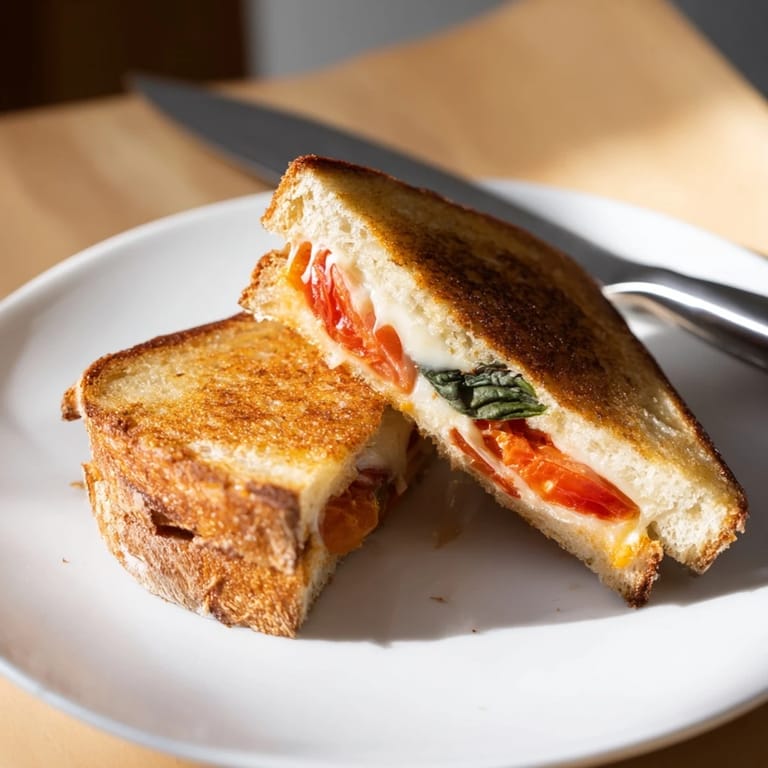
 There was a Thursday afternoon when I had nothing but half a loaf of sourdough and some tomatoes from the windowsill. I wasn't planning anything fancy, just something quick before a meeting. But then I spotted the basil plant I'd been neglecting, and suddenly that ordinary grilled cheese turned into something I actually wanted to sit down and taste. It's funny how a handful of fresh leaves can shift your whole mood in the kitchen.
I made this for my neighbor once when she came over frazzled from a long day. She sat at my counter, exhaled, and didn't say much until halfway through the sandwich. Then she looked up and said it tasted like someone cared, which is maybe the best compliment food can get. I've thought about that every time I've made it since.
Ingredients
- Rustic or sourdough bread: The slight chew and tang of good bread makes all the difference here, it holds up to the moisture from the tomatoes without getting soggy.
- Unsalted butter, softened: Softened butter spreads evenly and crisps up beautifully without burning, giving you that golden, crackling crust.
- Fresh mozzarella, sliced: This cheese melts into creamy, stretchy perfection and has a mild flavor that lets the basil and tomato shine.
- Ripe tomato, sliced: A juicy, in-season tomato brings sweetness and acidity, make sure it's ripe or the whole sandwich feels flat.
- Fresh basil leaves: Basil is the secret star, it adds a bright, aromatic layer that keeps this from tasting like just any grilled cheese.
- Salt and black pepper: Just a pinch wakes up the tomato and ties all the flavors together without overpowering anything.
Tired of Takeout? 🥡
Get 10 meals you can make faster than delivery arrives. Seriously.
One email. No spam. Unsubscribe anytime.
Instructions
- Butter the bread:
- Lay out all four slices and spread softened butter evenly on one side of each. This is what gives you that crispy, golden exterior, so don't skip the edges.
- Build the sandwiches:
- Place two slices buttered side down, then layer on mozzarella, tomato slices, and basil leaves. Sprinkle with salt and pepper, then top with the remaining bread slices, buttered side up.
- Heat the skillet:
- Warm a non-stick skillet or griddle over medium heat. You want it hot enough to toast the bread but not so hot that it burns before the cheese melts.
- Cook until golden:
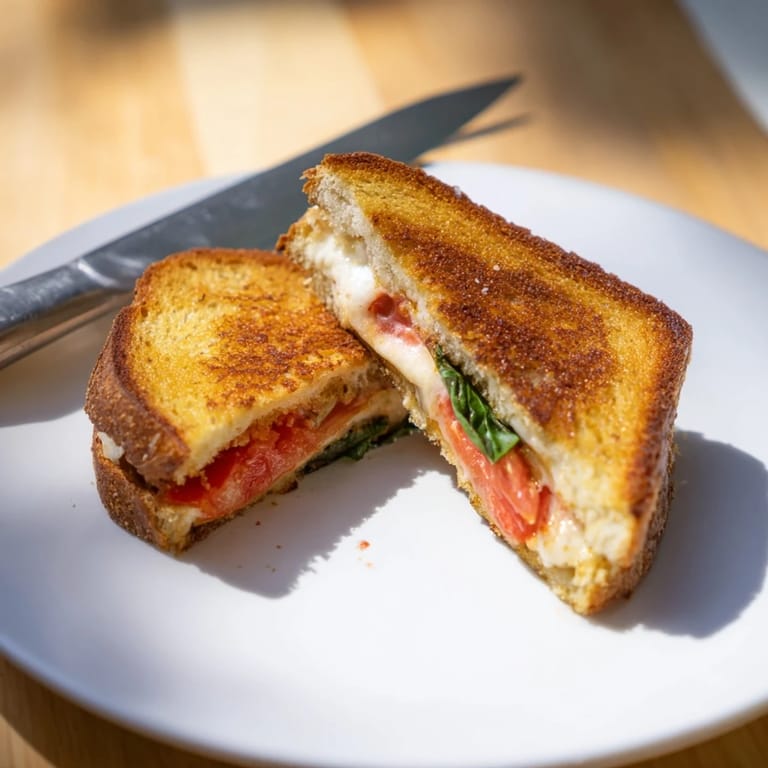
- Place the sandwiches in the skillet and cook for 3 to 4 minutes per side, pressing gently with a spatula. Flip when the bottom is deeply golden and the cheese starts to soften.
- Rest and serve:
- Remove from the pan and let the sandwiches rest for about a minute so the cheese sets slightly. Slice in half and serve while still warm and melty.
 Pin It
 One evening I made these for dinner alongside a pot of tomato soup, and my partner said it felt like being a kid again in the best way. We didn't talk much, just dipped and chewed and smiled. Sometimes the simplest meals are the ones that stick with you, not because they're complicated, but because they taste like comfort you didn't know you needed.
Choosing Your Bread
I've tried this sandwich with everything from white sandwich bread to multigrain, and while they all work, sourdough or rustic bread brings a sturdiness and flavor that really holds up. The slight tang complements the creamy mozzarella and the acidity of the tomato. If you go with something softer, just be extra careful not to oversaturate it with tomato juice, or it'll fall apart in the pan.
Tomato Tips
The tomato can make or break this sandwich. I once used a pale, winter tomato and the whole thing tasted like cardboard with cheese. Now I wait until tomatoes actually smell like tomatoes, or I'll roast them for a few minutes to concentrate their flavor. Heirloom varieties are gorgeous here, but even a good beefsteak or vine-ripened one works beautifully if it's in season.
Swaps and Variations
You can absolutely change up the cheese depending on what you have or what mood you're in. Provolone adds a sharper, smokier note, while aged cheddar brings more bite. I've even used a mix of mozzarella and a little parmesan for extra depth. If you want a bit of heat, a few red pepper flakes tucked in with the basil will do the trick.
- Try adding a thin spread of pesto on the inside for even more herby richness.
- A drizzle of balsamic glaze right before serving adds a sweet, tangy finish that feels a little fancy.
- Whole wheat or multigrain bread makes it heartier and adds a nutty flavor that works surprisingly well.
 Pin It
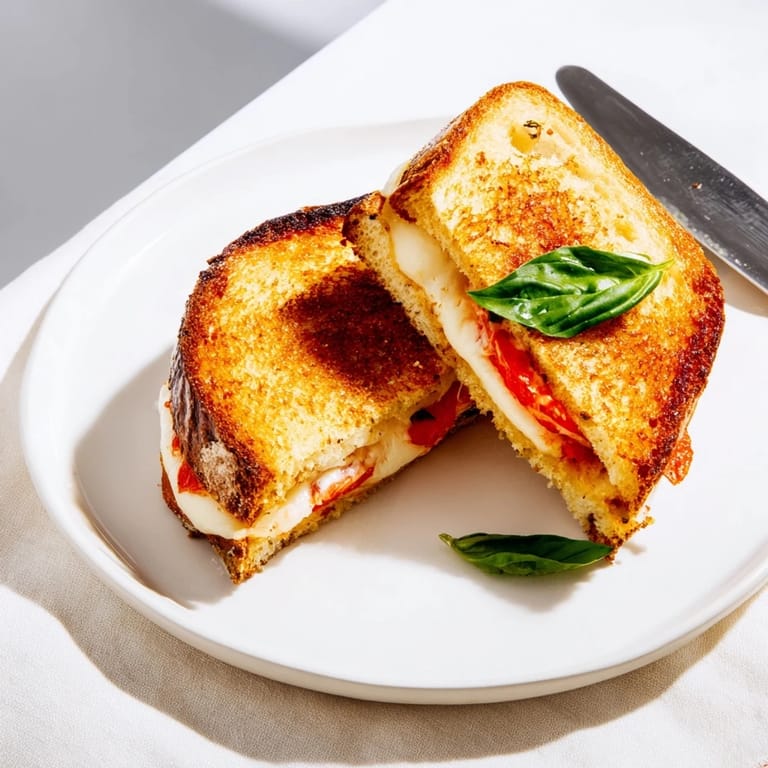
 This sandwich has become one of those things I make without thinking when I need something that feels like a hug. It's proof that you don't need a long ingredient list or fancy techniques to make something worth savoring.
Recipe FAQs
- → What type of bread works best for this sandwich?
Rustic or sourdough bread works wonderfully for this sandwich due to its sturdy texture and ability to hold the fillings without falling apart. Whole wheat or multigrain bread are also excellent alternatives for added nutrition and flavor.
- → How do I prevent the bread from getting soggy?
Pat your tomato slices dry with paper towels before assembling the sandwich to remove excess moisture. Additionally, layer the mozzarella before adding tomatoes to create a slight barrier that prevents liquid from soaking into the bread.
- → Can I prepare this sandwich ahead of time?
You can assemble the sandwich up to 30 minutes before cooking. However, avoid preparing it too far in advance as the tomato juice may begin to soak the bread. Toast it fresh when you're ready to eat for the best texture.
- → What cheese alternatives work if I don't have mozzarella?
Provolone and cheddar are excellent substitutes that offer different flavor profiles. Swiss cheese also works well for a nuttier taste. Experiment with your preferred melting cheese to find your favorite variation.
- → How can I enhance the flavor of this sandwich?
Drizzle balsamic glaze before serving for a tangy sweetness, or add a thin spread of pesto for herbaceous depth. A touch of garlic powder or red pepper flakes can also elevate the dish to your taste preference.
- → What heat setting should I use to cook this sandwich?
Medium heat is ideal to ensure the bread toasts evenly and the cheese melts completely without burning the exterior. Medium-low heat works if your skillet tends to cook quickly. Cooking for 3-4 minutes per side usually achieves the perfect golden-brown result.