 Pin It
 My neighbor knocked on the door one autumn evening with a jar of homemade miso paste and a sheepish grin, having made far too much. That night, I roasted whatever vegetables I had on hand with some butter and her miso, and the kitchen filled with this incredible savory-sweet aroma that seemed to deepen every few minutes. It was the kind of accident that sticks with you, the one that makes you understand why umami gets people so excited.
I made this for a potluck once and watched people go back for thirds without even asking what was in it. One friend tasted it, paused, and said, "This tastes like restaurant food, but better because there's less pretense." That moment sealed it for me.
Ingredients
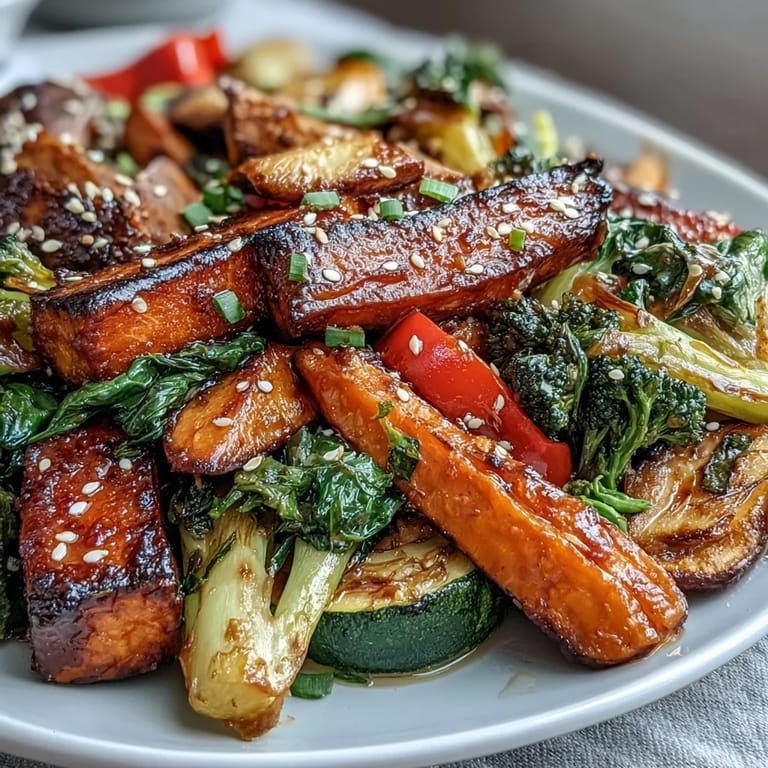
- Carrots and sweet potatoes: These sturdy vegetables hold their shape beautifully while soaking up the glaze, and the natural sweetness plays perfectly against the salty miso.
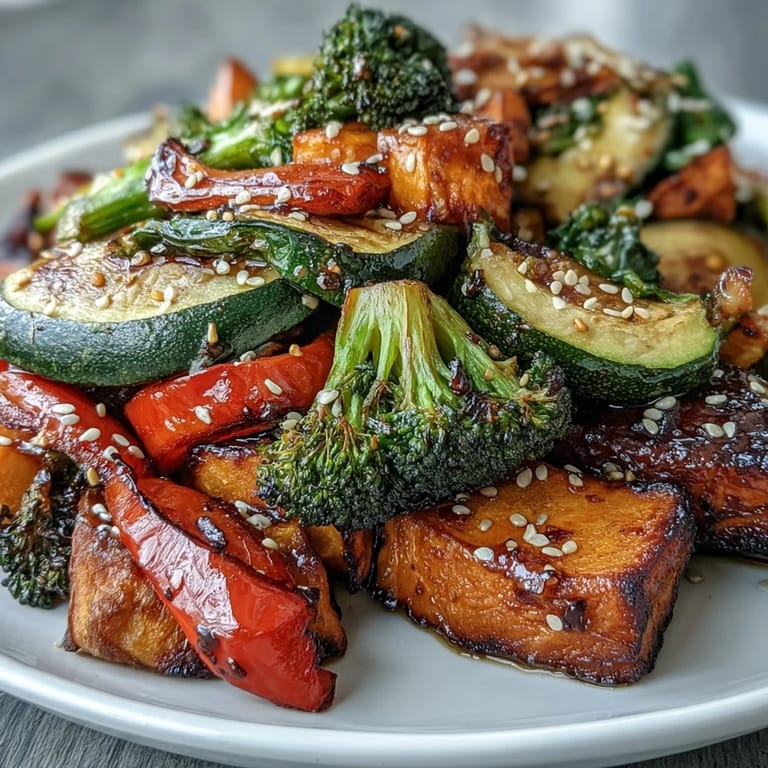
- Bell pepper, zucchini, and red onion: They add color and texture variety, and honestly, they cook just fast enough to stay tender without falling apart on you.
- Broccoli florets: The florets crisp up wonderfully at high heat, and they catch the glaze in their little crevices like small edible treasures.
- Unsalted butter: It's the base that carries the miso flavor, and using unsalted lets you control the salt yourself.
- White miso paste: This is the secret weapon, delivering that deep umami punch without overpowering the vegetables.
- Maple syrup or honey: A touch of sweetness balances the saltiness and helps the glaze caramelize beautifully in the oven.
- Soy sauce: It deepens the savory notes and adds complexity that makes people wonder what you did differently.
- Olive oil, rice vinegar, and garlic: These three work together to brighten everything and keep the glaze from tasting flat or one-dimensional.
Tired of Takeout? 🥡
Get 10 meals you can make faster than delivery arrives. Seriously.
One email. No spam. Unsubscribe anytime.
Instructions
- Heat your oven and prep your stage:
- Get the oven to 425°F and line a baking sheet with parchment paper so nothing sticks. This temperature is hot enough to coax real caramelization out of your vegetables without cooking them too fast.
- Gather your vegetables:
- Toss all your cut vegetables into a large bowl, making sure the pieces are roughly the same size so they cook evenly. Don't worry about perfect uniformity, just aim for consistency.
- Make the magic glaze:
- Whisk softened butter with miso paste, maple syrup, soy sauce, olive oil, rice vinegar, garlic, and black pepper until it looks smooth and glossy. If the miso paste is being stubborn, warm the bowl slightly over a pot of hot water to help it blend in.
- Coat everything:
- Pour the glaze over your vegetables and toss gently but thoroughly, making sure every piece gets coated. This is where the real flavor building starts.
- Spread and roast:
- Spread the vegetables in a single layer on your baking sheet, nestling them against each other just slightly so they roast rather than steam. About halfway through (around 15 minutes), give them a good stir with a spatula to help the glaze redistribute and the bottom layer get caramelized too.
- Know when they're done:
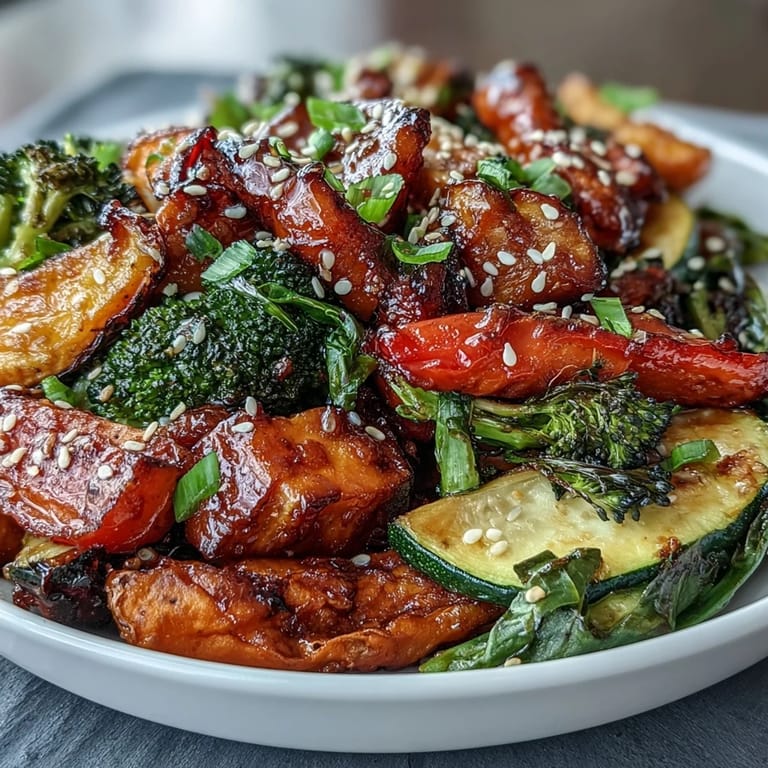
- You're looking for golden-brown edges and vegetables that yield easily to a fork, somewhere around 25 to 30 minutes total. The glaze will have darkened and gotten sticky, and your kitchen will smell incredible.
- Finish and serve:
- Transfer everything to a serving platter, scatter toasted sesame seeds and fresh parsley or scallions on top if you like, and serve while it's still warm. The vegetables will hold their temperature for a surprisingly long time.
 Pin It
 I brought this to a dinner where someone was going vegetarian for the first time, and they looked genuinely surprised at how satisfying it was. That moment reminded me that good food isn't about what you're leaving out, it's about what you're building with intention.
Vegetables That Work Best
The original combination is really solid, but I've learned that anything with a bit of structure holds up beautifully here. Brussels sprouts get crispy and caramelized at the tips, parsnips turn silky on the inside with crispy edges, and even cauliflower becomes something people actually want to eat.
Making It Your Own
Once you understand how the glaze works, you can start substituting based on what's in your crisper drawer. The ratios stay the same, but different vegetables bring their own personality to the table.
Storage and Serving Suggestions
These vegetables taste great hot out of the oven, but they're just as good at room temperature the next day if you need to make them ahead. I've found that leftovers actually develop even deeper flavor overnight, which is a nice bonus.
- Store any extras in an airtight container in the fridge for up to three days, and you can reheat gently in a low oven if you want them warm again.
- These pair beautifully with steamed rice, grilled fish, or crumbled tofu if you're building a meal around them.
- For a vegan version, swap the unsalted butter for plant-based butter and the rest stays exactly the same.
 Pin It
 This dish taught me that umami doesn't have to be complicated, just intentional. Once you nail this one, it becomes the kind of recipe you reach for when you want something that tastes like you spent more time on it than you actually did.
Recipe FAQs
- → What vegetables work best with the miso-butter glaze?
Root vegetables like carrots and sweet potatoes, along with zucchini, bell peppers, broccoli, and red onions, absorb the glaze well and roast evenly for balanced flavor and texture.
- → Can I substitute the butter for a vegan alternative?
Absolutely. Plant-based butter works well to maintain the creamy texture in the glaze while keeping the dish dairy-free.
- → How does roasting enhance the miso-butter glaze?
Roasting caramelizes the sugars in the glaze and vegetables, amplifying the umami depth and creating slightly crispy edges for a satisfying contrast.
- → Is it necessary to toss the vegetables halfway through roasting?
Yes. Stirring midway helps ensure even caramelization and prevents sticking, resulting in consistent texture throughout.
- → What are good garnishes to complement this dish?
Toasted sesame seeds add crunch and nuttiness, while fresh parsley or scallions brighten the flavors and add a fresh herbal note.
- → Can I add other seasonings to the glaze?
Yes, adjusting with spices like ginger or chili flakes can personalize the flavor while keeping the glaze harmonious with the vegetables.