 Pin It
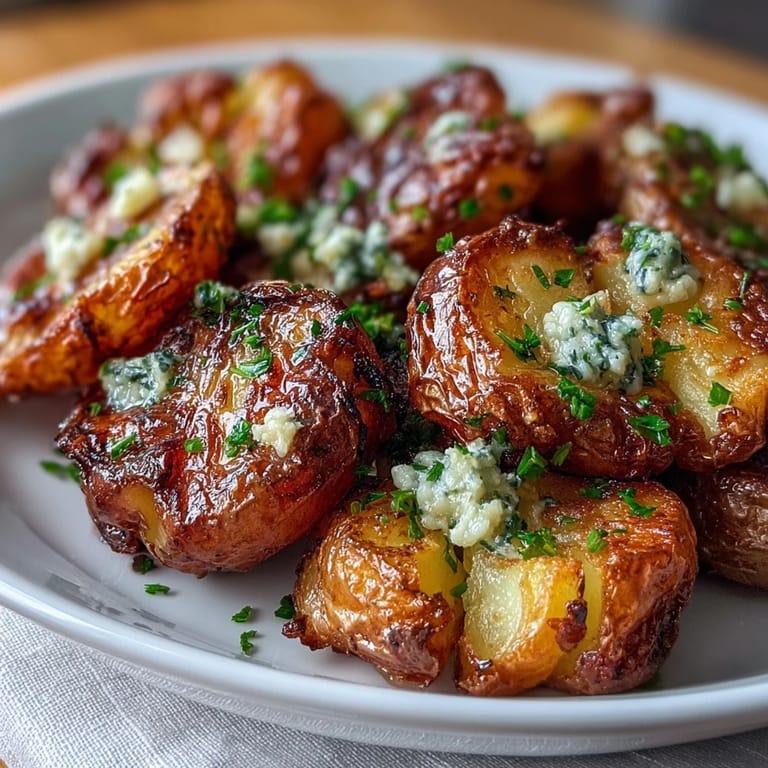
 A friend once called these potatoes 'the ones that taste like a restaurant,' and honestly, that compliment stuck with me. There's something magical about how baby potatoes transform under the oven's heat, their edges turning impossibly crispy while their insides stay pillowy soft. The garlic oil finish feels fancy but requires nothing more than patience and a watchful eye—no fancy techniques, just good ingredients working together. I've made them dozens of times now, and they somehow taste different each season, depending on the potatoes I find at the market. It's become my go-to when I want people to think I spent hours in the kitchen, when really I just understood the power of letting simple things shine.
I'll never forget serving these at a potluck where someone showed up with store-bought sides. My golden potatoes caught the light as I set them down, and I watched three people reach for them first, before the fancy casserole everyone had fussed over. That's when I realized this dish had crossed over from 'nice side' to 'the thing people actually want more of.' Since then, I've stopped apologizing for their simplicity and started celebrating it.
Ingredients
- Baby potatoes: Choose ones roughly the same size so they cook evenly; waxy varieties hold their shape better than starchy ones, which matters when you're smashing them later.
- Extra virgin olive oil: This is where the magic lives—use something you'd actually taste on bread, because you will taste it here, and mediocre oil will show.
- Garlic cloves: Mince them finely and watch them carefully while they cook; browned garlic tastes bitter, but garlic cooked until just golden and fragrant becomes sweet and almost buttery.
- Fine sea salt: For boiling, it dissolves quickly and seasons evenly, unlike coarse salt which leaves pockets of oversalting.
- Fleur de sel: This finishing salt has larger crystals and a delicate texture; it's worth seeking out because it adds a final whisper of sophistication and texture.
- Fresh parsley: Optional but recommended—it adds a bright note that cuts through the richness of the oil and keeps the dish from feeling heavy.
Tired of Takeout? 🥡
Get 10 meals you can make faster than delivery arrives. Seriously.
One email. No spam. Unsubscribe anytime.
Instructions
- Prep your station:
- Preheat your oven to 220°C (425°F) and line a baking sheet with parchment paper; this small step means you won't scramble later and your potatoes will have a proper home waiting.
- Boil the potatoes gently:
- Cover them with cold water, add salt, and bring to a boil before reducing the heat to a gentle simmer for 15–20 minutes. You'll know they're ready when a fork slides through without resistance—overcooked potatoes become mushy and won't hold their shape during smashing.
- Smash with intention:
- Once drained, arrange them on your baking sheet and gently press each one to about half an inch thick using a potato masher or the bottom of a sturdy glass. The goal is crushed, not pureed—you want texture and exposed surface area for crisping.
- First coat of oil:
- Drizzle 2 tablespoons of olive oil over the smashed potatoes and toss gently to coat every surface, then slide them into the oven.
- Roast until golden:
- They'll need 20–25 minutes to develop those coveted crispy, caramelized edges while staying tender inside; the kitchen will smell incredible, and that's your signal you're doing it right.
- Make the garlic oil:
- While potatoes roast, pour the remaining oil into a small saucepan over low heat and add your minced garlic, stirring constantly for 2–3 minutes until it becomes fragrant and turns a pale golden color. The moment it smells sweet rather than sharp, turn off the heat and step back—this happens faster than you think.
- Finish and serve:
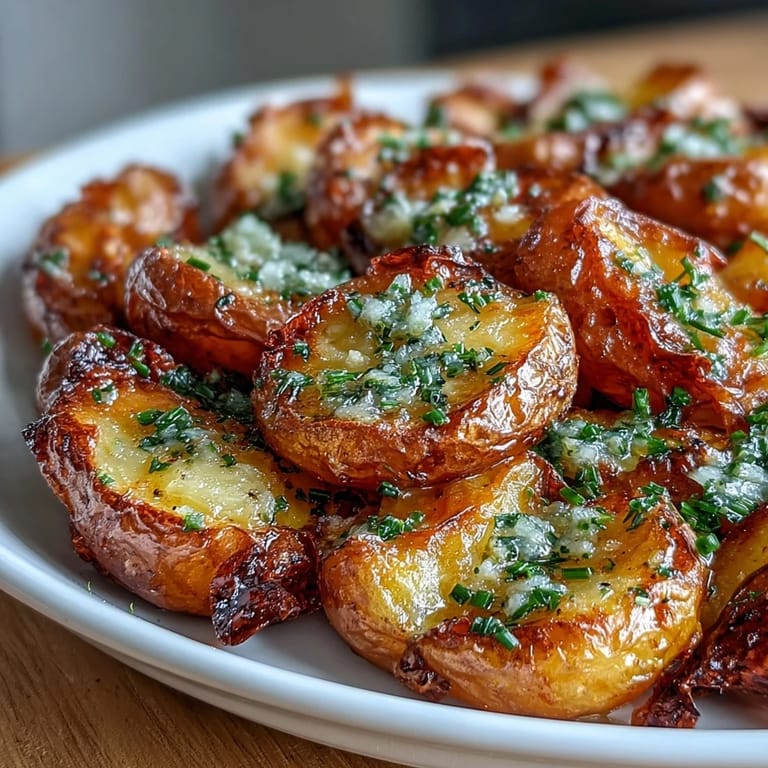
- As soon as the potatoes emerge from the oven, drizzle them generously with the warm garlic oil, then scatter fleur de sel and black pepper across the top. If using parsley, add it now so it stays bright and doesn't wilt into invisibility.
 Pin It
 There was an evening when a guest with no dietary restrictions whatsoever ate three servings of these potatoes and ignored the roasted chicken entirely. In that moment, I understood that sometimes the smallest gesture—a side dish given real attention and care—becomes the thing people remember about the meal. These potatoes taught me that humble doesn't mean boring, and simple doesn't mean forgettable.
The Secret of Smashing
The smashing technique is less about brute force and more about creating surface area for the oven to work its magic. When you press each potato to about half an inch thick, you're giving the heat access to more of the potato, which means more edges to crisp and caramelize. I learned this the hard way by once mashing them into oblivion, creating a compacted mess that steamed instead of roasted. Now I use a gentle touch and a sturdy glass, letting the weight do the work rather than my arm strength.
Timing and Temperature Matters
The oven temperature of 220°C (425°F) is specific for a reason—hot enough to brown and crisp the edges quickly without drying out the insides. Too low, and you'll end up with pale, soft potatoes that taste boiled rather than roasted. Too high, and the outside blackens before the inside finishes cooking. I keep my oven light on during the final minutes, watching for that moment when the edges shift from golden to deep amber, which is exactly when you want to pull them out.
Variations and Why They Work
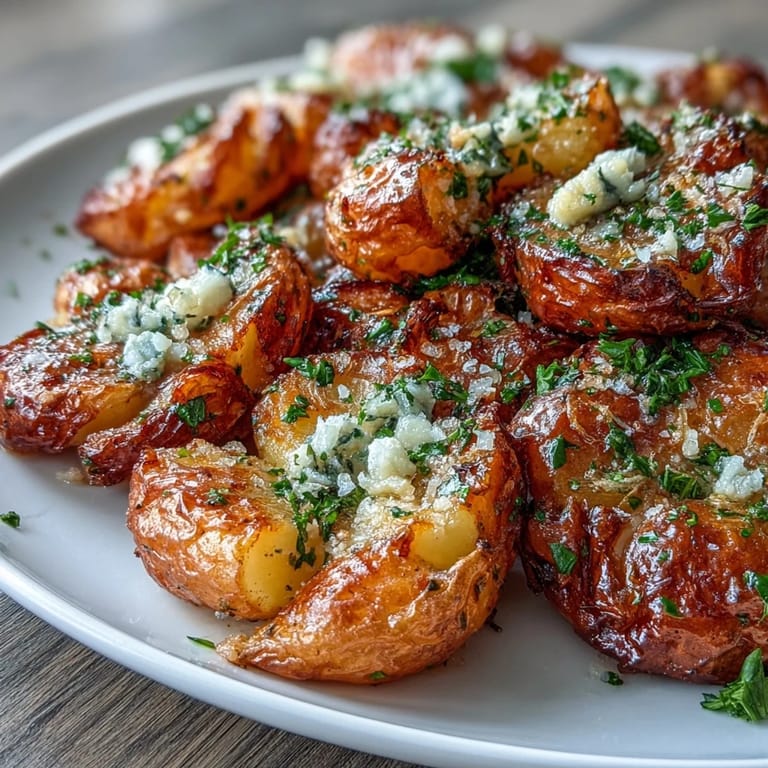
This recipe has a beautiful blank canvas quality that invites creativity without requiring it. The base is perfect as written, but I've experimented endlessly with what goes into that garlic oil and what garnish lands on top. A tiny pinch of chili flakes adds heat that wakes up the palate, while fresh thyme or chives offer different herbal notes depending on what's in your garden or fridge. You can even add a whisper of lemon zest at the very end, though I save that for spring when I want brightness rather than richness.
- Chili flakes add a subtle kick without overwhelming the delicate garlic flavor.
- Fresh herbs like thyme, chives, or even dill create entirely different moods with the same base.
- A squeeze of lemon zest brings lightness and pairs beautifully with grilled fish or chicken.
 Pin It
 These potatoes remind me why cooking is worth doing—because sometimes the most straightforward approach, executed with real attention, becomes the thing that matters. Serve them hot, watch people light up, and enjoy the quiet satisfaction of knowing you made something genuinely good.