 Pin It
 My sourdough starter has been living on my counter for three years, and honestly, I'd forgotten what to do with all that weekly discard until a friend mentioned she'd been baking it into scones. The idea seemed almost too simple—tender, buttery scones with that subtle tang working underneath bright lemon and sweet blueberries. I made a batch on a drizzly April morning, and the kitchen smelled like a bakery I'd want to visit every day.
My neighbor knocked on the door one Saturday morning, drawn by the smell wafting across our shared fence line. When I handed her a warm scone with a cup of tea, she took one bite and just closed her eyes—that kind of moment that reminds you why baking matters. She's been texting me for the recipe ever since.
Ingredients
- All-purpose flour (2 1/4 cups): This is your structure, so don't skip the measuring—too much flour means dense, tough scones that nobody wants.
- Granulated sugar (1/4 cup): Just enough sweetness to balance the tang and tartness without making these dessert-like.
- Baking powder and baking soda (1 tablespoon and 1/2 teaspoon): Together they lift the scones and react with the sourdough discard to create that tender crumb.
- Fine sea salt (1/2 teaspoon): A pinch of salt amplifies everything else and prevents the scones from tasting flat.
- Lemon zest (from 1 large lemon): The zest holds the real lemon oils, so don't rely on juice alone—this is where the brightness comes from.
- Cold unsalted butter (1/2 cup cubed): Cold butter creates steam pockets in the dough, which is how you get those flaky layers, so really do chill it beforehand.
- Sourdough discard (1 cup, unfed and room temperature): This is the star—thick, slightly bubbly, and ready to work without being fed first, giving you a subtle tang and moisture that cream alone can't provide.
- Heavy cream (1/4 cup, plus more for brushing): Rich cream keeps the scones tender and adds a luxurious mouthfeel that balances the tang.
- Large egg (1): The binder that holds everything together while also enriching the dough.
- Vanilla extract (1 teaspoon): A small amount deepens the flavors without announcing itself.
- Fresh lemon juice (2 tablespoons): Squeeze it fresh—bottled juice tastes hollow and won't brighten the flavor the same way.
- Fresh blueberries (1 cup): If frozen, keep them unthawed so they hold their shape and don't turn your dough purple.
- Coarse sugar for topping (optional 2 tablespoons): This creates a subtle sparkle and gentle crunch on top—worth the extra step if you have it.
Tired of Takeout? 🥡
Get 10 meals you can make faster than delivery arrives. Seriously.
One email. No spam. Unsubscribe anytime.
Instructions
- Heat your oven and prep your workspace:
- Set the oven to 400°F and line a baking sheet with parchment paper so you can slide the scones on without sticking.
- Mix the dry foundation:
- Whisk together flour, sugar, baking powder, baking soda, salt, and lemon zest in a large bowl—the zest should be evenly distributed so every bite gets that bright flavor.
- Cut in the cold butter:
- Add cubed cold butter and work it in with a pastry blender or your fingertips until the mixture looks like coarse crumbs with some pea-sized butter pieces still visible. This is crucial for flaky scones, so don't rush or the butter will melt in.
- Combine the wet mixture:
- Whisk together sourdough discard, cream, egg, vanilla, and fresh lemon juice in a separate bowl until smooth and completely combined.
- Bring wet and dry together:
- Pour the wet mixture into the dry ingredients and stir with a wooden spoon just until the dough comes together—you should still see some dry streaks, and that's okay. Overmixing will make the scones tough and dense.
- Fold in the berries gently:
- Add the blueberries with a light hand, turning the dough over itself a few times rather than stirring aggressively. If any berries get squished, that's fine, but you want most of them whole.
- Shape your scones:
- Turn the dough out onto a lightly floured surface and pat it into a circle about 1 inch thick and 7 inches across—your hands will feel where it's the right thickness. Use a sharp knife or bench scraper to cut the circle into 8 wedges like a pizza.
- Arrange on the baking sheet:
- Transfer each wedge to the parchment-lined sheet with a little space between them so steam can circulate and they brown evenly.
- Add the finishing touch:
- Brush the tops lightly with extra cream and sprinkle with coarse sugar if you're using it, then let them rest while the oven finishes preheating.
- Bake until golden:
- Bake for 18 to 22 minutes—start checking around the 18-minute mark because every oven runs a little differently. The tops should be golden brown and the centers set, not jiggly.
- Cool and serve:
- Let the scones rest on the baking sheet for 5 minutes so they firm up slightly, then transfer to a wire rack. They're best eaten warm or at room temperature within a few hours of baking.
 Pin It
 There's something almost magical about the moment you pull these out of the oven and the kitchen fills with that golden, lemony, butter-laced warmth. My daughter once asked if we could make them every week, which honestly felt like the highest compliment I could get as a baker.
The Sourdough Discard Secret
Using sourdough discard instead of buttermilk or yogurt adds a layer of complexity that store-bought ingredients can't replicate. The fermentation in the starter introduces a subtle tang that plays beautifully against the lemon, and it actually gives the scones a slightly longer shelf life because the acidity preserves them naturally. I've found that room-temperature discard works best—it's already had time to develop flavor and integrates more smoothly into the wet mixture without creating lumps.
Lemon Like You Mean It
Don't be shy with the lemon in this recipe—the zest, the juice, and the acid all work together to create brightness rather than sourness. Fresh zest makes all the difference here because you're capturing the essential oils that bottled lemon extract can't touch, and squeezing your own juice takes just a minute longer but tastes infinitely fresher. I've started keeping a microplane grater specifically for zest because it gives a finer, more even distribution than a box grater.
Storage and Variations
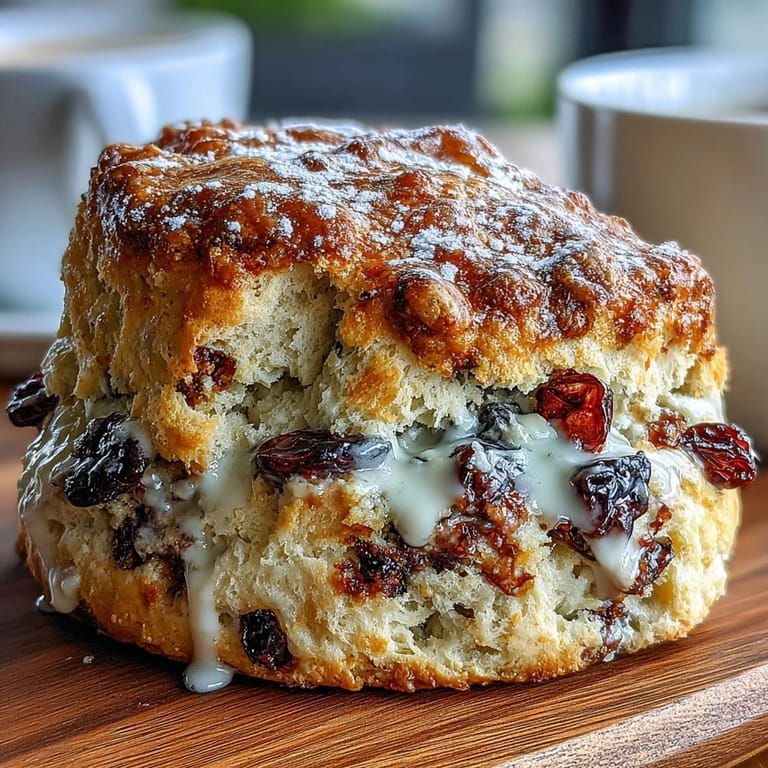
These scones are meant to be eaten fresh, but they keep in an airtight container for up to two days, and honestly they taste great at room temperature or even gently rewarmed. A simple glaze of powdered sugar and fresh lemon juice drizzled over cooled scones takes them from breakfast pastry to something more elegant. You can also swap the blueberries for raspberries, blackberries, or even chopped strawberries, though the blueberries' tartness pairs most naturally with the lemon.
- If you don't have sourdough discard, buttermilk mixed with a touch of plain yogurt creates a similar tang in a pinch.
- Make these scones ahead up to the shaping step, chill the wedges overnight, and bake them fresh in the morning for peak flavor.
- A lemon glaze feels fancy but is just three parts powdered sugar to one part fresh lemon juice whisked smooth.
 Pin It
 These blueberry lemon sourdough scones have become my answer to the question of what to do with weekly discard, and they're so much better than anything I could buy. Bake them, share them, and watch how quickly they disappear.
Recipe FAQs
- → Can I use frozen blueberries?
Yes, fold frozen blueberries directly into the dough to prevent them from bleeding into the batter.
- → What is sourdough discard and why use it?
Sourdough discard is the leftover starter from feeding your sourdough. It adds a subtle tang and helps tenderize the scones.
- → How do I achieve a flaky texture?
Cut cold butter into dry ingredients until coarse crumbs form to create flakiness when baked.
- → Can I substitute buttermilk for cream?
Yes, buttermilk can replace cream to add a slight tang and tender crumb.
- → What’s the best way to store these scones?
Store in an airtight container at room temperature for up to two days to maintain freshness.
- → How to add extra lemon flavor?
Drizzle a simple lemon glaze made with powdered sugar and lemon juice over cooled scones.