 Pin It
 My grandmother had this peculiar habit of serving dessert before the main course whenever she wanted to make someone feel truly special. One autumn evening, she emerged from her kitchen with this stunning black currant cheesecake, its deep purple swirls catching the candlelight, and I finally understood her logic. That first bite—creamy, tangy, sophisticated—was worth breaking every rule she'd ever taught me about meal order. It became the dessert I'd recreate whenever I needed to transform an ordinary evening into something memorable.
I made this for my partner's parents on their anniversary, terrified the whole thing would crack or sink. Instead, it came out looking like it belonged in a glossy magazine, and I watched their faces light up when they tasted that first forkful. That moment—when good food becomes a conversation starter rather than just dessert—is when I knew this recipe had become essential to my cooking repertoire.
Ingredients
- Digestive biscuits or graham crackers (200 g, crushed): These form your foundation, and crushing them by hand until they resemble wet sand gives you better control than a food processor.
- Unsalted butter (80 g, melted): The melted butter binds everything together, so make sure it's actually melted and not just warm or you'll end up with a crumbly base.
- Granulated sugar for crust (2 tbsp): This small amount adds just enough sweetness to balance the tartness later.
- Black currants (250 g, fresh or frozen): Frozen currants work beautifully here and honestly save you the hunt for fresh ones, though both deliver that distinctive bright, slightly tart flavor.
- Lemon juice (1 tbsp): This brightens the compote and prevents it from tasting one-dimensional.
- Cornstarch slurry (1 tsp mixed with 1 tbsp water): This is the secret to a compote that stays thick and doesn't weep into the cheesecake batter.
- Cream cheese (700 g, room temperature): Room temperature is non-negotiable—cold cream cheese lumps and won't blend smoothly, ruining the silky texture.
- Granulated sugar for filling (200 g): Beat this with the cream cheese until visibly fluffy, which incorporates air and lightens the texture.
- Large eggs (3, room temperature): Like the cream cheese, cold eggs don't incorporate smoothly, and they also tighten the filling.
- Sour cream (180 ml): This adds tang and a slightly looser crumb, preventing that dense, heavy cheesecake texture.
- All-purpose flour (1 tbsp): A small amount stabilizes the filling without making it taste floury.
- Pure vanilla extract (2 tsp): Pure vanilla matters here because the delicate flavors deserve something genuine.
- Lemon zest (from 1 lemon): This echoes the tartness of the currants and adds complexity without being obvious.
Tired of Takeout? 🥡
Get 10 meals you can make faster than delivery arrives. Seriously.
One email. No spam. Unsubscribe anytime.
Instructions
- Prepare your stage:
- Preheat your oven to 160°C and line a 23 cm springform pan with parchment paper on the bottom—this prevents sticking and makes removal effortless. Greasing the sides of the pan helps too, though the cheesecake naturally releases from the metal.
- Build the foundation:
- Mix crushed biscuits, melted butter, sugar, and salt until it resembles damp sand, then press it firmly into the pan—use the bottom of a measuring cup to create an even, compact layer. Bake for 10 minutes until it sets slightly, then let it cool while you move on.
- Make the compote:
- Combine black currants, sugar, and lemon juice in a saucepan and cook over medium heat for about 5 minutes, stirring occasionally, until the berries burst and release their juices. Stir the cornstarch slurry into the thickened mixture and simmer for 1–2 minutes more, then remove from heat and let it cool completely—this prevents the compote from melting into the batter during swirling.
- Create the filling:
- Beat room-temperature cream cheese and sugar together until noticeably fluffy and pale, which takes about 3–4 minutes and aerates the mixture. Add eggs one at a time, beating gently after each addition, then fold in sour cream, flour, vanilla, lemon zest, and salt until just combined—overmixing incorporates too much air and causes cracks.
- Swirl and bake:
- Pour the filling over the cooled crust, then spoon cooled compote in small dollops across the surface and use a skewer or thin knife to create gentle, abstract swirls—don't overwork it or the swirls disappear into the batter. Set the springform pan into a roasting tin, add hot water to the tin until it reaches halfway up the pan's sides, then bake for 50–60 minutes until the edges are set but the center still jiggles slightly when gently shaken.
- Cool with intention:
- Turn off the oven, crack the door open, and let the cheesecake sit inside for 1 hour—this gradual cooling prevents the dramatic temperature shock that causes cracking. Remove it from the oven, let it reach room temperature, then refrigerate for at least 4 hours or overnight, which also allows the flavors to deepen and meld.
 Pin It
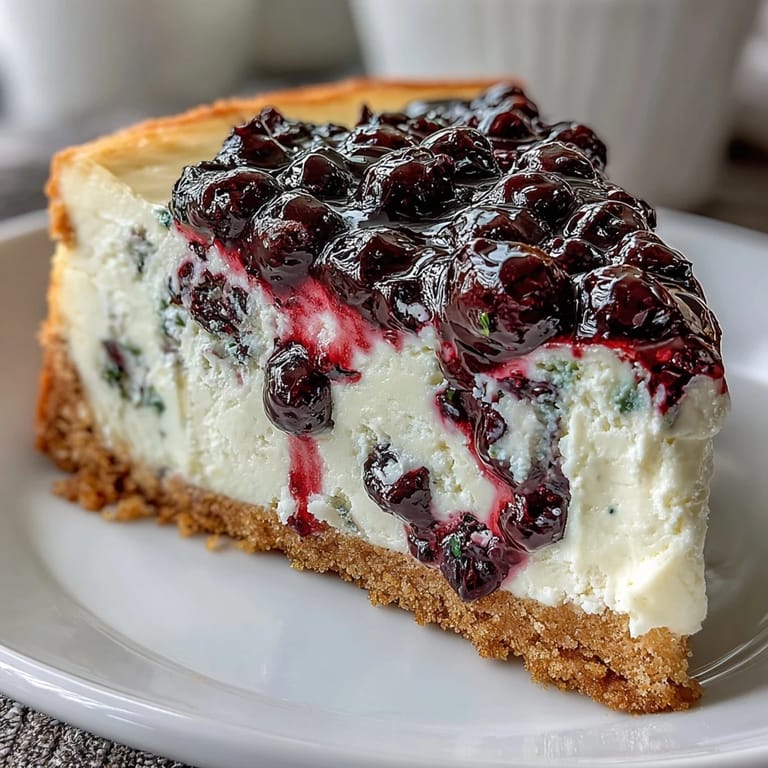
 There's something almost meditative about watching this cheesecake set in the fridge, knowing that in a few hours it will become the kind of dessert that makes people close their eyes and eat slowly. I've learned that the anticipation is part of the magic—rushing it never ends well, but honoring those quiet hours of chilling pays off in ways that quick desserts simply cannot.
The Magic of Black Currant
Black currants have this almost mysterious flavor that's nothing like the more common blueberries or blackberries—they're bright and sharp and deeply berry-like all at once. When I first started using them in baking, I couldn't quite name what made them special until a friend described them as the "thinking person's berry," which stuck with me because there's nothing simple about their flavor profile. They demand attention and respect rather than drowning in sugar, which is why they pair so perfectly with the gentle creaminess of cheesecake.
Water Bath Wisdom
The water bath is genuinely the secret weapon here, and understanding why it works changed how I approach all my custard-based desserts. The water acts as a buffer, distributing heat evenly and gently around the cheesecake, preventing the edges from overcooking while the center stays creamy. Without it, you get a dense, slightly rubbery texture and a higher chance of cracks—with it, you get silk.
Serving Suggestions and Final Touches
Serve each slice at cool room temperature rather than straight from the fridge, which allows the flavors to open up and the texture to feel less dense. A dollop of whipped cream or an extra spoonful of compote transforms a perfect dessert into an indulgent moment, and fresh lemon zest scattered over the top adds brightness.
- For a gluten-free version, swap the digestive biscuits for certified gluten-free alternatives and the filling remains exactly the same.
- Blueberries or raspberries work beautifully if you can't locate black currants, though they're less tart and may need slightly less sugar in the compote.
- Make this a day or two ahead if you're entertaining—it actually improves as flavors deepen and meld together overnight.
 Pin It
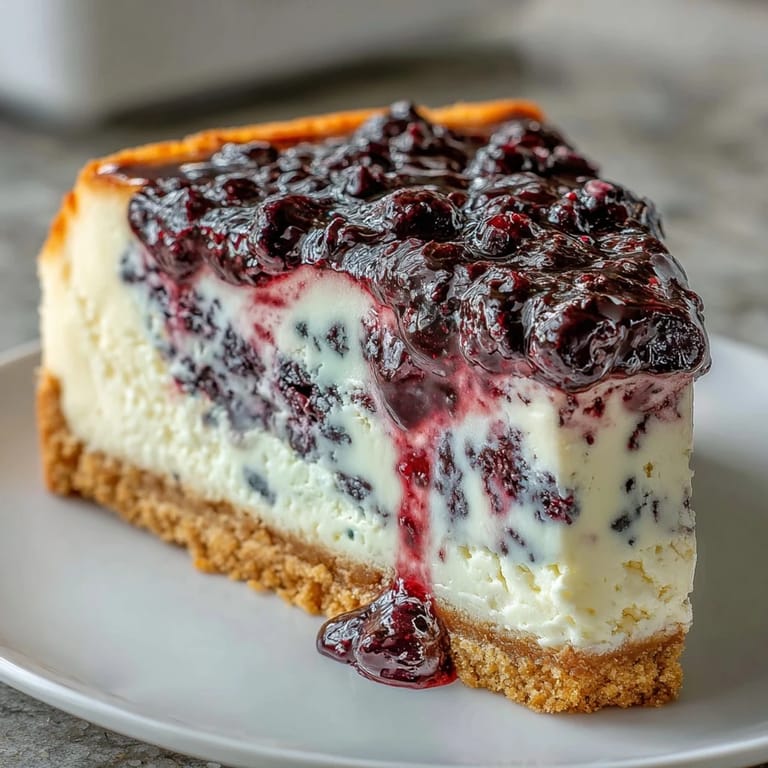
 This cheesecake has a way of becoming the dessert people request by name, the one that marks a meal as something special. Make it for yourself first, learn its quirks, and then share it with people who deserve that kind of care.
Recipe FAQs
- → How do I make the black currant compote?
Simmer black currants with sugar and lemon juice until soft, then stir in a cornstarch slurry and cook briefly to thicken.
- → What is the purpose of the water bath during baking?
The water bath provides gentle, even heat to prevent cracking and ensure a smooth, creamy texture.
- → Can I substitute the crust for a gluten-free option?
Yes, gluten-free biscuits can be used to create a suitable crust for dietary needs.
- → How long should the dessert be chilled before serving?
Chill for at least 4 hours or overnight to fully set and develop flavors.
- → What are good berry alternatives to black currants?
Blueberries or raspberries work well as fruity substitutes in the compote.