Pin It
 My grandmother used to say that black-eyed peas on New Year's Day weren't just tradition—they were insurance, a way of saying yes to whatever luck the year decided to hand you. The first time I made her version, I stood in my kitchen on December 31st, watching the dried peas transform into something warm and alive, smoky sausage curling up at the edges of the pot. That ritual stuck with me, and now whenever I simmer this dish, I'm cooking with her sitting at my table, even though she's been gone for years.
I made this for my partner one gray January morning after we'd stayed up too late talking about fresh starts. They were skeptical about dried beans—understandably—but by the time the first spoonful hit their mouth, I watched their whole face soften. That's when I understood this wasn't just food; it was a small promise that good things take time and patience, and they're worth waiting for.
Ingredients
- Smoked sausage (Andouille or Kielbasa), 225 g: This is where the soul lives—seek out quality sausage with actual smoke flavor, not just liquid smoke listed in the ingredients.
- Thick-cut bacon, 115 g: Don't skimp here; thin bacon disappears, but thick-cut pieces stay chewy and flavorful throughout the cooking.
- Dried black-eyed peas, 450 g: Rinse and sort them carefully by hand, picking out any little stones or shriveled peas that snuck into the bag.
- Onion, 1 large: The sweeter the onion, the better—yellow onions caramelize beautifully in the rendered bacon fat.
- Green bell pepper, 1: This adds brightness without overpowering; it softens into the broth and you barely notice it's there, but you'd miss it if it wasn't.
- Celery stalks, 2: This is part of the holy trinity of Southern cooking—onion, bell pepper, celery—and it adds an earthy undertone you can't quite name but absolutely need.
- Garlic cloves, 3, minced: Add this after the softer vegetables or it'll burn and turn bitter; trust me on this one.
- Low-sodium chicken broth, 1.5 liters: Low-sodium lets you taste the peas and meat without being overpowered by salt; you control the seasoning.
- Water, 240 ml: This dilutes the broth slightly and lets the peas release their starch, creating a naturally creamy texture without any cream.
- Bay leaves, 2: Don't crush them; keep them whole so you can fish them out before serving (and your guests won't bite into one by accident).
- Smoked paprika, 1 tsp: This is non-negotiable—it gives that deep, smoky undertone that makes people ask what your secret ingredient is.
- Dried thyme, 1/2 tsp: Dried works better here than fresh; the heat brings out its earthiness more gently.
- Cayenne pepper, 1/2 tsp optional: Only add this if you like heat—a little goes a long way, and you can always pass hot sauce at the table for those who want more.
- Freshly ground black pepper, 1/2 tsp: Grind it yourself just before adding; pre-ground loses its spark.
- Kosher salt, 3/4 tsp plus more to taste: Taste as you go near the end of cooking; peas need more salt than you'd expect to taste properly.
- Fresh parsley, 2 tbsp chopped: This brightens everything at the last moment; add it just before serving so it stays fresh and green.
- Hot sauce, to serve: Keep a bottle nearby—some people want their peas hot, and that's their right.
Tired of Takeout? 🥡
Get 10 meals you can make faster than delivery arrives. Seriously.
One email. No spam. Unsubscribe anytime.
Instructions
- Prepare the peas with intention:
- Soak dried black-eyed peas overnight in cold water, or if time's tight, cover them with boiling water, let them sit for an hour, then drain and rinse. This softens their tough outer skin and makes them cook more evenly—skip this step and you'll have crunchy centers no matter how long you simmer.
- Render the bacon until it sings:
- Cut bacon into bite-sized pieces and cook slowly over medium heat in your Dutch oven, stirring occasionally, until the edges are dark and crispy but the centers still have a tiny bit of chew. This takes about 8 minutes, and the rendered fat is your cooking foundation.
- Sear the sausage for depth:
- Add sliced sausage to the same pot and let it brown in those bacon drippings, about 5 to 7 minutes, stirring occasionally. Don't crowd the pan; give the pieces room to develop a crust, which adds complexity to the final flavor.
- Build your flavor base with the holy trinity:
- Add diced onion, bell pepper, and celery to the pot and sauté until they soften and the onion turns translucent, about 5 to 6 minutes. Stir regularly so nothing sticks, and you'll start to smell something that says this is about to become something special.
- Wake it up with garlic:
- Add minced garlic and cook for just one more minute—any longer and it burns, any shorter and it doesn't release its flavor. The aroma will shift from sweet vegetables to something savory and complex.
- Combine everything into the broth:
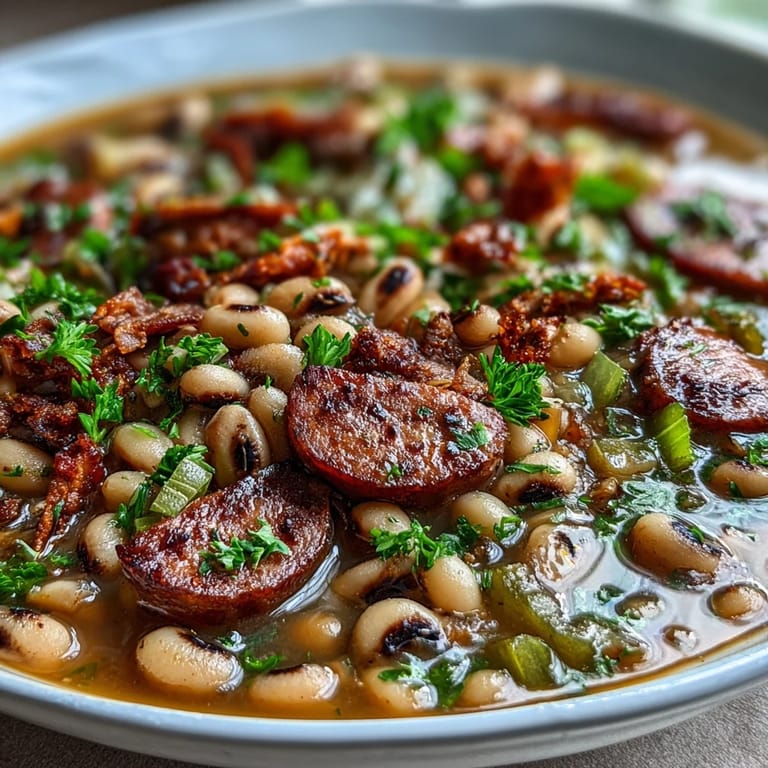
- Return your bacon and sausage to the pot, then add the drained peas, chicken broth, water, bay leaves, smoked paprika, thyme, cayenne if you're using it, black pepper, and salt. Stir everything together so the spices distribute evenly.
- Let time do the work:
- Bring the pot to a boil, then reduce the heat to low, cover it, and let it simmer for 1 to 1.5 hours until the peas are tender enough to break easily between your fingers but still hold their shape. Stir occasionally and listen for the gentle bubble-bubble-bubble that tells you everything's on track.
- Taste, adjust, and finish:
- Remove the bay leaves, taste the broth, and add more salt if needed—peas always need more seasoning than you think. Sprinkle fresh parsley over the top just before serving for color and freshness.
 Pin It
 The year my brother came home unexpectedly on New Year's Eve, I made this dish, and he sat at my table eating in silence for a while before he said it tasted like coming back. Sometimes food does that—it holds memory and belonging in a way that transcends ingredients. That's what these peas are, really: permission to sit with people you love and let the year unfold.
When to Make This
New Year's Day is the traditional time, but honestly, this dish works any time you need something hearty and grounding. I make it in January when the weather's gray and the world feels uncertain, or in late fall when I want to transition from summer lightness to something warm. It's also perfect for feeding a crowd on game day or when you're hosting people who appreciate food that takes time.
What to Serve Alongside
Steamed rice is the classic pairing—it catches the broth and becomes something almost creamy when you combine them on the plate. Cornbread is essential, something buttery and slightly sweet to balance the savory depth of the peas. Beyond that, sautéed collard greens or a simple green salad cut through the richness, and iced tea or a crisp white wine feels right alongside.
Making It Your Own
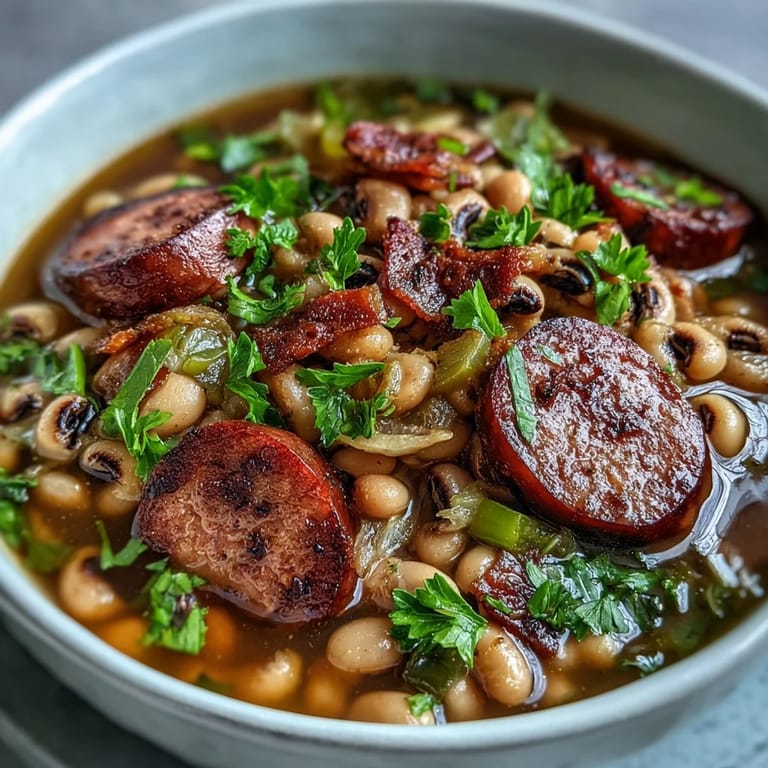
This recipe is sturdy enough to handle your additions without falling apart. Some people add diced tomatoes for acidity and brightness, or a splash of apple cider vinegar if they want that tangy twist. You can stir in collard greens in the last 15 minutes of cooking, or add a ham hock if you want deeper, meatier flavor—just remove the bone before serving.
- For vegetarian peas, skip the meat entirely and use vegetable broth, then add an extra half teaspoon of smoked paprika or a teaspoon of liquid smoke to keep that depth.
- If you forget to soak the peas, add 15 to 30 extra minutes of cooking time, but start checking them sooner to avoid mushy peas.
- Make a double batch and freeze half; these peas taste even better after a day or two when the flavors have settled into each other.
 Pin It
 These black-eyed peas are about more than luck; they're about the small rituals we keep to stay grounded and connected. Make them, share them, and let them become part of your story the way they've become part of mine.
Recipe FAQs
- → Do I need to soak black-eyed peas before cooking?
Yes, soaking dried black-eyed peas overnight ensures even cooking and tender results. If you're short on time, use the quick soak method by covering them with boiling water for one hour before draining and proceeding with the dish.
- → Can I make this vegetarian?
Absolutely. Simply omit the bacon and sausage, then substitute vegetable broth for chicken broth. Add extra smoked paprika or a few drops of liquid smoke to maintain that rich, smoky depth that the meats typically provide.
- → What makes this dish Southern-style?
The combination of the 'holy trinity' vegetables (onion, bell pepper, celery), Creole seasonings like smoked paprika and thyme, plus the slow-simmered technique with smoked meats creates that authentic Southern flavor profile.
- → How do I store and reheat leftovers?
Store cooled black-eyed peas in an airtight container in the refrigerator for up to 5 days. The flavors actually improve after a day or two. Reheat gently on the stovetop, adding a splash of water or broth if needed to loosen the consistency.
- → What's traditionally served with black-eyed peas?
Steamed white rice is the classic accompaniment, allowing the flavorful broth to soak into the grains. Cornbread, collard greens, or sautéed kale also make excellent sides. For beverages, iced sweet tea or a crisp white wine complements the meal perfectly.