 Pin It
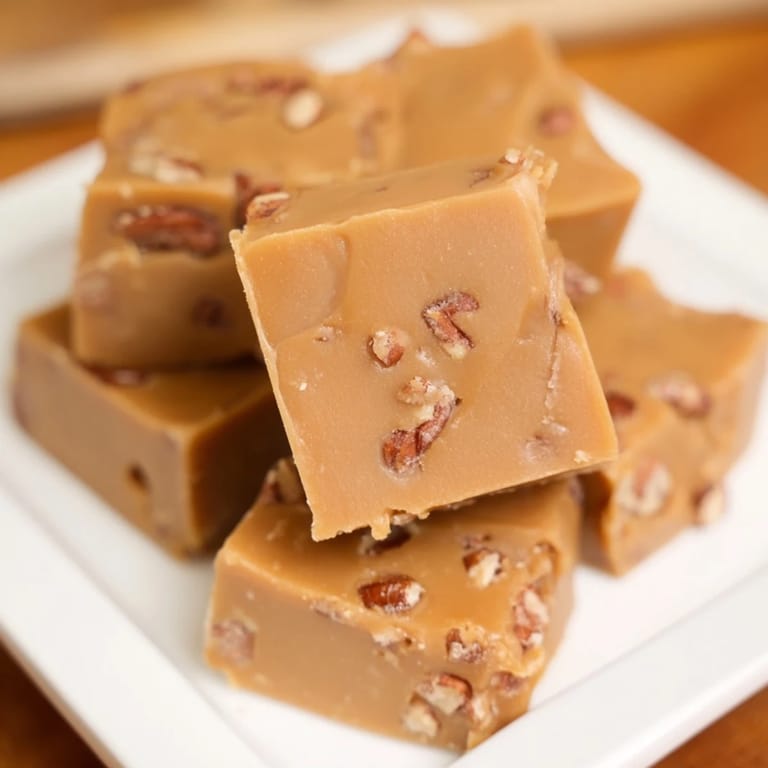
 I discovered penuche fudge on a cold November afternoon at my aunt's house, where she pulled out a tin of squares that tasted like brown sugar and butter had somehow learned to melt on the tongue. She wouldn't share the recipe for years, claiming it was temperamental, but when I finally tried making it myself, I realized the fudge wasn't difficult—it just needed patience and a little respect for the candy thermometer. Now it's become my go-to when I need something that feels handmade and thoughtful, whether I'm bringing it to a holiday gathering or just keeping a batch hidden in the pantry for quiet moments with coffee.
I made this for my coworker's birthday once, packaged it in a little box with tissue paper, and watched her face light up when she bit into a square—she said it reminded her of her grandmother's kitchen. That moment taught me that homemade fudge carries something store-bought never will, something that tastes like you actually cared enough to stand at the stove and pay attention.
Ingredients
- Light brown sugar (2 cups, packed): This is where the fudge gets its name and soul—don't use dark brown sugar unless you want a heavier, more molasses-forward flavor.
- Granulated sugar (1 cup): Works with the brown sugar to build the right crystalline structure and smooth texture.
- Whole milk (3/4 cup): Room temperature milk prevents temperature shock to the mixture and helps everything blend evenly.
- Unsalted butter (1/2 cup, cubed): Cut it into pieces so it melts evenly into the sugars without creating hot spots.
- Fine sea salt (1/4 tsp): A small amount wakes up the sweetness and makes everything taste more intentional.
- Pure vanilla extract (1 1/2 tsp): Use real vanilla—imitation tastes thin and flat against the brown sugar's depth.
- Chopped pecans or walnuts (1 cup, optional): Toast them lightly before folding in if you want them to taste nuttier and less like an afterthought.
Tired of Takeout? 🥡
Get 10 meals you can make faster than delivery arrives. Seriously.
One email. No spam. Unsubscribe anytime.
Instructions
- Prepare your stage:
- Line an 8-inch square baking pan with parchment paper, letting the edges hang over the sides so you can lift the finished fudge out like it's being born into the world. Butter the paper lightly so nothing sticks.
- Combine and dissolve:
- In a heavy-bottomed saucepan over medium heat, stir together the brown sugar, granulated sugar, milk, butter cubes, and salt until the mixture looks smooth and starts to bubble gently. This usually takes 3 to 5 minutes, and you'll see the butter melt into the sugars like they've been waiting for each other.
- Cook to soft-ball stage:
- Attach a candy thermometer to the side of the pan without letting it touch the bottom. Stop stirring now—let the mixture climb to 238°F (114°C) on its own, which takes about 10 to 12 minutes. This temperature is the sweet spot where the fudge will be creamy but still hold its shape.
- Cool and listen:
- Remove from heat and let it sit completely undisturbed for 10 minutes. This resting time matters more than you'd think—it lets the temperature even out and prepares the mixture to transform under the beating.
- Beat it into submission:
- Add the vanilla extract, then beat the mixture with a wooden spoon or electric mixer on low speed until it thickens, loses its glossy sheen, and looks more like frosting than liquid—usually 5 to 8 minutes. You'll know it's ready when a spoon dragged through it leaves a trail that holds for a moment.
- Add texture if you're using it:
- Fold in the chopped nuts gently so they're distributed throughout without crushing them.
- Pour and settle:
- Immediately pour the fudge into your prepared pan and smooth the top with a spatula, moving quickly because it starts setting fast. Let it rest at room temperature for at least an hour until it's firm enough to cut without crumbling.
- Cut and finish:
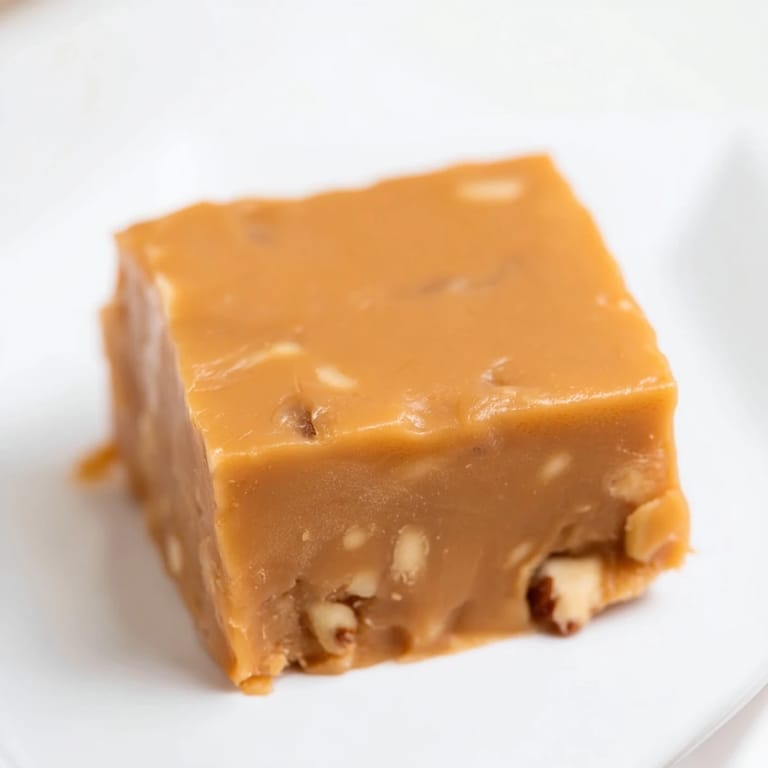
- Lift the whole thing out using the parchment overhang and cut it into 1-inch squares with a sharp knife, wiping the blade between cuts for clean edges.
 Pin It
 There was an evening when my sister came home stressed from work, and I handed her a piece of this fudge with a cup of tea. She sat at the kitchen counter in complete silence for a minute, then asked for another piece—no words needed, just the kind of comfort that comes from something simple and genuinely delicious.
The Science Behind the Smoothness
Penuche fudge works because of three things happening together: the brown sugar brings molasses and depth, the cooking temperature creates the right sugar crystal structure, and the beating action keeps those crystals tiny and even. When the mixture reaches soft-ball stage, the sugar molecules are packed with enough water to stay creamy instead of turning hard. Understanding this takes the mystery out of why penuche feels different from other fudges—it's intentional chemistry, not luck.
Flavor Variations Worth Trying
The base recipe is perfect on its own, but once you've made it a few times, you'll start hearing the other possibilities. A pinch of cinnamon adds warmth without announcing itself, and maple extract brings an elegance that makes people ask what your secret is. Some people add a tiny bit of instant coffee to deepen the brown sugar notes, and I've had versions with a single pinch of cayenne that made the sweetness come alive. The fudge is forgiving enough that small experiments almost always work.
Storing and Gifting Your Fudge
Penuche fudge keeps beautifully at room temperature in an airtight container for up to a week, though it rarely lasts that long. I've learned that fudge wrapped in wax paper and packed in a pretty box makes people feel special in a way that's hard to replicate—there's something about homemade candy that says you spent time and attention. If you're storing it for longer, keep it in the coldest part of your kitchen away from sunlight, or wrap and freeze it for up to a month.
- Pack it in layers separated by parchment so the pieces don't stick together.
- Add a handwritten note saying what you added or didn't add—people appreciate knowing if it's nut-free or what made it special.
- If it gets too soft in warm weather, just pop it back in the fridge for 20 minutes before serving.
 Pin It
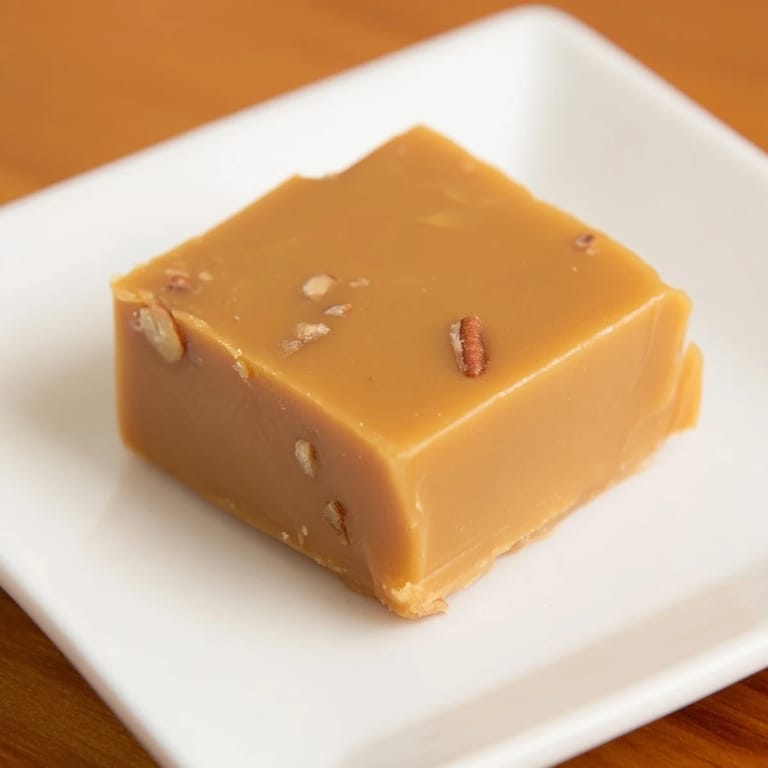
 Make this fudge when you want to remember that the best things often come from paying attention to small details and simple ingredients. It's the kind of recipe that gets better each time you make it.
Recipe FAQs
- → What gives penuche its caramel flavor?
The caramel flavor comes from cooking light brown sugar gently with butter and milk, which develops rich, buttery notes.
- → Can I skip the nuts in penuche?
Yes, the nuts are optional and omitting them yields a smooth, nut-free confection.
- → How do I know when the sugar mixture is ready?
Cook the mixture until it reaches the soft-ball stage around 238°F (114°C), which can be tested using a candy thermometer.
- → Why is beating important after cooling?
Beating thickens the mixture, reduces gloss, and helps it hold shape, giving the final texture a smooth and creamy consistency.
- → What tools are needed for making penuche?
A saucepan, candy thermometer, wooden spoon or mixer, baking pan lined with parchment, and a spatula are essential for preparation.
- → How should this confection be stored?
Store in an airtight container at room temperature for up to one week to maintain freshness and texture.