 Pin It
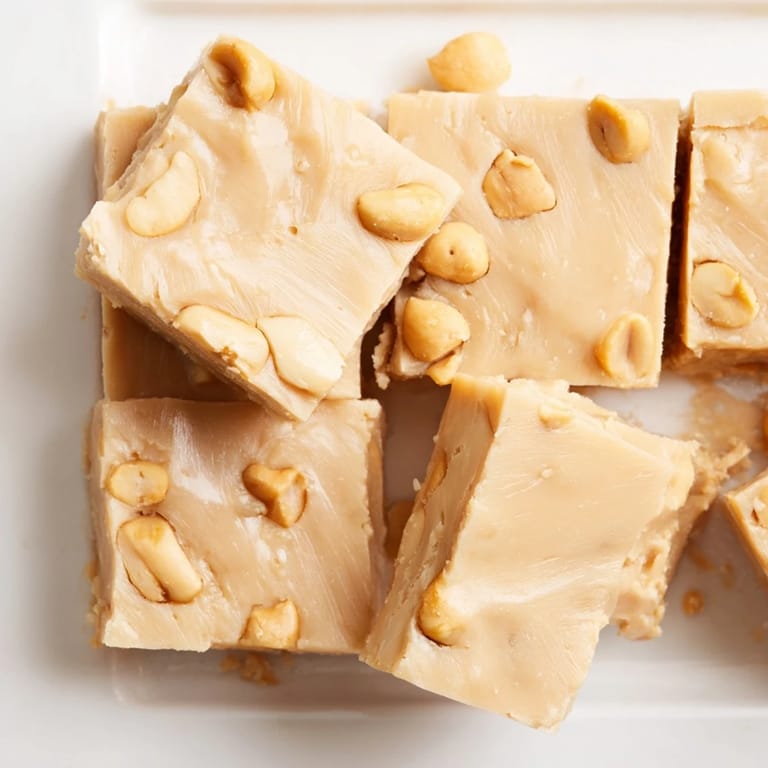
 My neighbor dropped off a tin of homemade peanut butter fudge one December, and I ate three pieces before even sitting down. Something about the way it melted on my tongue—buttery, not too sweet, with that genuine peanut flavor cutting through—made me determined to figure out how to make it myself. Turns out it's almost absurdly simple, which is probably why I've been making it ever since, always on a quiet afternoon when I want the kitchen to smell like comfort.
I made this fudge for my coworker's birthday last year, and watching her face when she bit into a piece—eyes closing like she'd just heard good news—made me understand why people bother with homemade gifts at all. She kept a piece on her desk for weeks, just looking at it before finally eating it.
Ingredients
- Unsalted butter (1 cup): Use real butter, not margarine; it's the backbone of the creamy texture and the main reason this fudge tastes like actual comfort.
- Creamy peanut butter (1 cup): Smooth is your friend here—natural or conventional, just avoid chunky, which throws off the texture.
- Pure vanilla extract (1 teaspoon): The secret whisper that rounds out all the other flavors without announcing itself.
- Confectioners sugar, sifted (3½ cups): Sifting matters more than you'd think; it prevents lumps that refuse to disappear no matter how hard you stir.
Tired of Takeout? 🥡
Get 10 meals you can make faster than delivery arrives. Seriously.
One email. No spam. Unsubscribe anytime.
Instructions
- Set yourself up for success:
- Line your 8x8-inch pan with parchment paper, letting the edges hang over the sides like little handles. This small step saves you from ever scraping fudge off the bottom of a pan again.
- Melt the butter and peanut butter together:
- In a medium saucepan over medium heat, combine them and stir constantly. You'll feel the transformation from two separate things into one glossy, smooth mixture after about 3–4 minutes. Watch for that moment when everything looks like liquid silk.
- Add the vanilla and let it disappear:
- Remove the pan from heat and stir in the vanilla. It smells incredible, like the fudge just got a gentle nudge toward perfection.
- Fold in the confectioners sugar slowly:
- This is where patience pays off. Add the sugar gradually while stirring hard—your arm will get tired, which is how you know you're doing it right. Stop when the mixture is thick and completely smooth, no grainy bits hiding in the corners.
- Pour and smooth:
- Pour everything into your prepared pan and use a spatula to flatten the top. Aim for even coverage, but don't stress over perfection—it's fudge, not a sheet cake.
- Chill until it's ready:
- Pop it in the refrigerator for at least an hour. The fudge will go from soft to firm, from pourable to sliceable, and from good to absolutely worth the wait.
- Cut and serve:
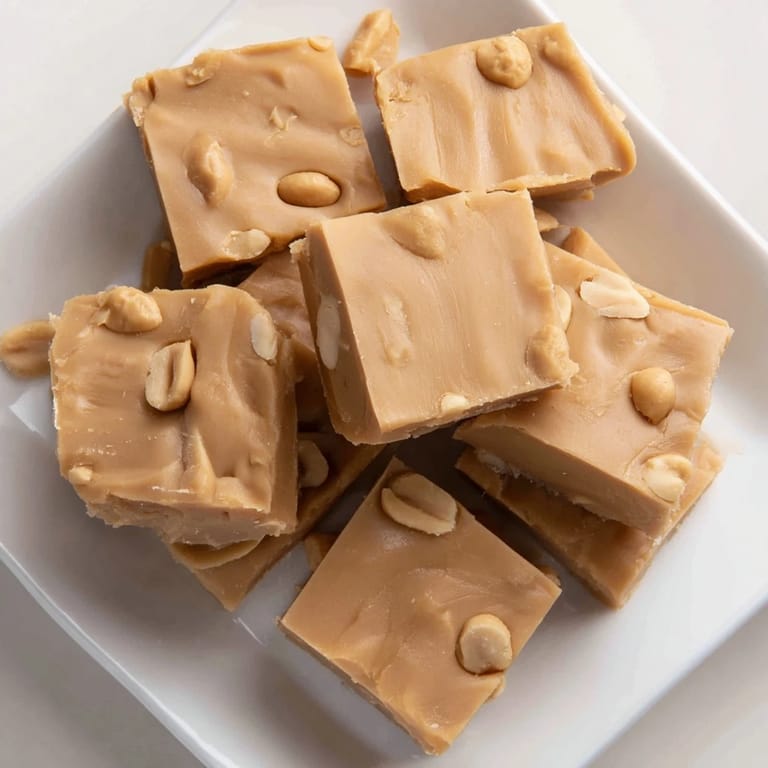
- Lift the entire slab out using the parchment overhang, then use a sharp knife to cut it into 36 squares. If your knife gets sticky, wipe it clean between cuts or run it under hot water.
 Pin It
 My daughter once asked if I could make the fudge 'less sweet,' and I realized she didn't actually want less sweetness—she wanted more peanut butter flavor. That small comment led me to experiment with ratios, and suddenly this simple recipe became a canvas for tweaking.
When You Want to Get Creative
The beauty of this fudge is that it welcomes additions without demanding them. Fold in half a cup of roasted salted peanuts before pouring into the pan for a chunky version that gives your teeth something to do. Or swirl in melted semi-sweet chocolate for a classic combination that feels indulgent without being complicated. Even switching the peanut butter for almond butter transforms it into something entirely different—lighter, more subtle, somehow more elegant.
Storage and Longevity
Store this fudge in an airtight container in the refrigerator where it'll keep for up to a week, or tuck it into the freezer for up to two months. I've learned that fudge actually freezes beautifully—it doesn't crystallize or develop ice crystals, and you can pull out a piece whenever the craving hits. The one rule I follow is letting it sit at room temperature for a few minutes before eating if it's come straight from the freezer, because cold peanut butter fudge is almost too firm to enjoy the flavor.
Small Moments That Matter
There's something meditative about stirring confectioners sugar into warm peanut butter mixture, watching the colors shift and the texture change. It's not complicated enough to stress you out, but it demands just enough attention to pull you fully into the moment. I've made this fudge when I needed to think through something difficult, and I've made it when I simply wanted my kitchen to smell like happiness. Either way, it works.
- If your fudge seems too soft after chilling, pop it back in the freezer for an extra 30 minutes rather than worrying you've made a mistake.
- A hot knife makes cleaner cuts than a cold one—just run it under hot water and wipe it dry between each cut.
- Room temperature fudge tastes richer and more flavorful than cold fudge, so save a few pieces to eat a few hours after pulling them from the refrigerator.
 Pin It
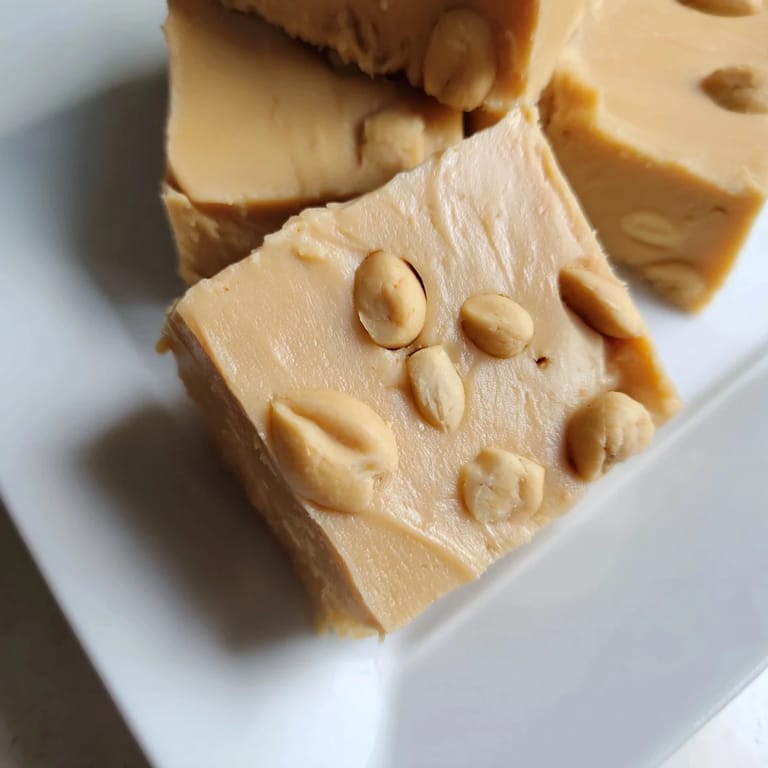
 This fudge is proof that the simplest recipes often become the most beloved, the ones you make without thinking because your hands remember the motions. It's earned its place in my regular rotation, showing up whenever there's an excuse to fill the kitchen with warmth.