 Pin It
 My kitchen smelled like a spice cabinet had exploded the first time I really committed to making gingerbread cookies from scratch. I'd been buying the pre-made dough for years, thinking I was saving time, until a friend casually mentioned hers turned out almost better than the ones at the bakery down her street. That afternoon, I stood at my counter with molasses dripping off a wooden spoon, suddenly understanding why my grandmother had always made these in November. The soft dough felt alive in my hands, and I realized I'd been missing something essential.
I made these for my neighbors one December morning after our pipes froze, which sounds odd until you realize warm gingerbread cookies are basically an apology and a thank you wrapped into one. Three hours later, I had a casserole dish back on my porch and a note that just said "needed this." That's when I stopped thinking of them as just cookies.
Ingredients
- All-purpose flour (3 cups): This is your foundation, and measuring by weight instead of volume will save you from dense cookies that feel like hockey pucks.
- Unsalted butter (3/4 cup), softened: Cold butter won't cream properly with the sugar, so take it out of the fridge about an hour before you start, or cut it into small cubes to speed things up.
- Packed dark brown sugar (3/4 cup): Don't skip the packing step; it matters more than you'd think for the moisture content of your dough.
- Unsulphured molasses (1/2 cup): This is non-negotiable. Blackstrap molasses will make your cookies taste like you're eating a health food, which is the opposite of what we want here.
- Ground ginger (1 tablespoon): The soul of these cookies. Fresh is better than old, so check your spice cabinet's dates before you start.
- Ground cinnamon (2 teaspoons), ground cloves (1/2 teaspoon), ground nutmeg (1/2 teaspoon): These three work together like a choir, and any one of them overpowering the others will throw off the whole song.
- Baking soda (3/4 teaspoon) and baking powder (1/2 teaspoon): Together they create lift and a subtle tang that balances the sweetness.
- Large egg: Room temperature eggs mix in more smoothly, creating a better emulsion with the butter and molasses.
- Pure vanilla extract (1 teaspoon): The cheap stuff will taste cheap, and you'll notice it.
- Granulated sugar (1/4 cup) for rolling: Optional, but it gives the cookies a subtle sparkle and crunch that feels intentional.
Tired of Takeout? 🥡
Get 10 meals you can make faster than delivery arrives. Seriously.
One email. No spam. Unsubscribe anytime.
Instructions
- Gather and dry your ingredients:
- Whisk together flour, baking soda, baking powder, ginger, cinnamon, cloves, nutmeg, and salt in a medium bowl. Setting these aside now means you won't scramble to find them later or accidentally forget the cloves.
- Cream butter and brown sugar:
- Beat them together for about 2 minutes until the mixture goes pale and fluffy, like you're building a cloud. This is where air gets incorporated into your dough, so don't rush it or skip ahead.
- Add the wet ingredients:
- Drop in the egg, molasses, and vanilla, then beat until everything is well combined and the molasses has basically disappeared into the mixture. The bowl will smell incredible at this point.
- Bring wet and dry together:
- Add the dry mixture gradually to the wet mixture, stirring just until incorporated. Overmixing will make your cookies tough, so stop as soon as you don't see any white streaks of flour.
- Chill the dough:
- Divide the dough into two discs, wrap them in plastic wrap, and let them sit in the fridge for at least 1 hour. This gives the flour time to fully hydrate and the flavors time to deepen, and it also prevents the cookies from spreading too much in the oven.
- Prepare your workspace:
- Preheat your oven to 350°F and line your baking sheets with parchment paper. A lightly floured surface is your friend when rolling, but don't go overboard or your cookies will be dry.
- Roll and cut:
- Working with one disc at a time, roll the dough out to about 1/4-inch thickness and cut into shapes with your favorite cookie cutters. The dough should feel smooth and cooperative at this point.
- Space and sugar:
- Place the cut cookies about 1 inch apart on your prepared baking sheets and sprinkle with granulated sugar if you're using it. This step is optional but gives them a professional finish.
- Bake with intention:
- Bake for 8 to 10 minutes, until the edges are just firm but the centers still have a tiny bit of give when you gently press them. The cookies will continue to set as they cool, so don't overbake.
- Cool with patience:
- Let them sit on the baking sheet for 2 minutes to firm up slightly, then transfer to a wire rack to cool completely. This two-minute rest prevents them from breaking apart when you move them.
- Decorate as you wish:
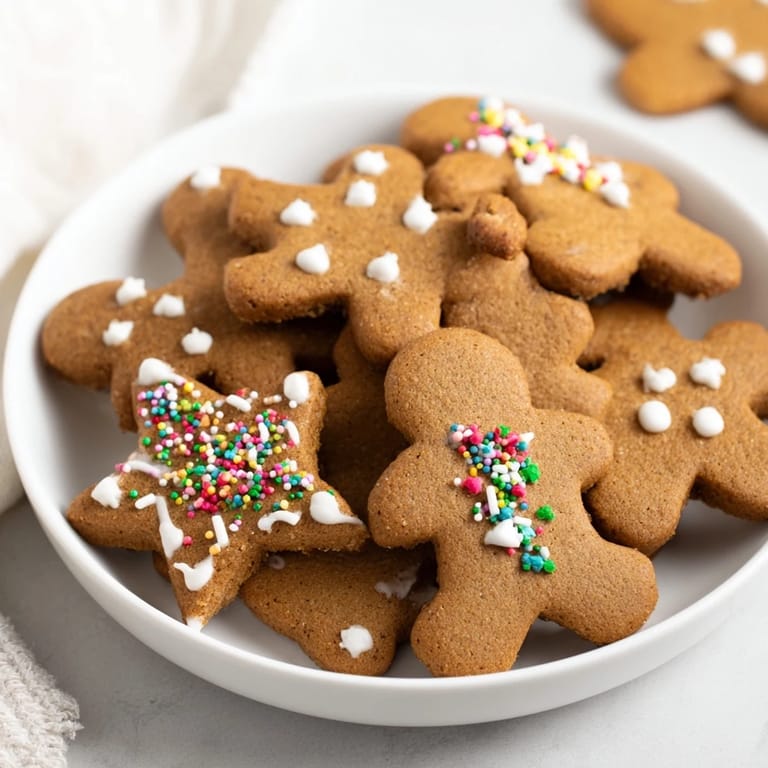
- Once completely cool, brush on royal icing or a simple glaze and add sprinkles if you want them to feel festive. The icing needs the cookies to be fully cool or it'll slide right off.
 Pin It
 I learned the real magic of these cookies wasn't about following a recipe perfectly. It was about the moment my daughter helped me decorate a batch and realized she could make art out of something edible. We stood there for an hour with icing and sprinkles, making ridiculous faces on gingerbread people, and somehow that became a tradition.
The Science Behind the Spice
Ginger, cinnamon, and cloves aren't just flavoring agents. They're spices that activate warmth receptors in your mouth, which is why gingerbread feels cozy and nostalgic on a neurological level. The molasses contributes something deeper too. It's not just sweetness; it's a subtle bitterness that keeps these cookies from tasting one-dimensional. When all the spices work together without one dominating, you get a complexity that makes people say things like "I can't stop eating these" and actually mean it.
Storage and Make-Ahead Strategy
The dough is more forgiving than the baked cookies. You can make it up to three days ahead and keep it refrigerated, or freeze it for up to two months. I've actually found that frozen dough bakes beautifully straight from the freezer with maybe 30 seconds extra in the oven. Once baked, the cookies keep in an airtight container for about five days, though they're best eaten within the first two or three days when the edges still have that subtle crunch against the soft center.
Pairing and Serving Ideas
These cookies are built for partnership. Hot chocolate is the obvious choice, but I've also dunked them in mulled wine on cold afternoons and served them alongside spiced tea. They pair well with coffee too, especially the kind that's strong enough to stand up to the ginger without getting overwhelmed. If you're making these for a gift or gathering, arrange them in a box or tin and they become instantly special.
- Stack them with parchment paper between layers so they don't stick together or break.
- A ribbon or handwritten tag transforms a box of cookies into something that feels personal and intentional.
- These cookies are actually better the next day when all the flavors have had time to settle and meld together.
 Pin It
 Gingerbread cookies have been around for centuries, and they've lasted this long for a reason. They're not complicated, they don't demand perfection, and they taste like someone cared enough to make them.
Recipe FAQs
- → What gives these cookies their signature flavor?
The combination of molasses and ground spices like ginger, cinnamon, cloves, and nutmeg provides the distinct warm and rich flavor characteristic of these cookies.
- → How does chilling the dough affect the final texture?
Chilling the dough firms it up, making it easier to roll and cut clean shapes. It also helps the cookies maintain their form during baking, contributing to a balanced soft yet slightly crunchy texture.
- → Can I adjust the baking time to change cookie texture?
Yes, baking for the minimum time yields softer cookies, while extending baking by a minute or two creates a crisper edge and firmer bite.
- → What decorations work best with these spiced cookies?
Royal icing or simple glaze paired with colored sprinkles add festive touches that complement the warm spices and molasses flavors beautifully.
- → Are there any recommended ingredient substitutions for dietary needs?
For gluten-free options, use a 1:1 gluten-free flour blend. Plant-based butter can replace dairy butter for a dairy-free version without altering flavor significantly.
- → How long can the dough be stored before baking?
The dough can be refrigerated for up to three days or frozen for up to two months, allowing for convenient preparation ahead of time.