 Pin It
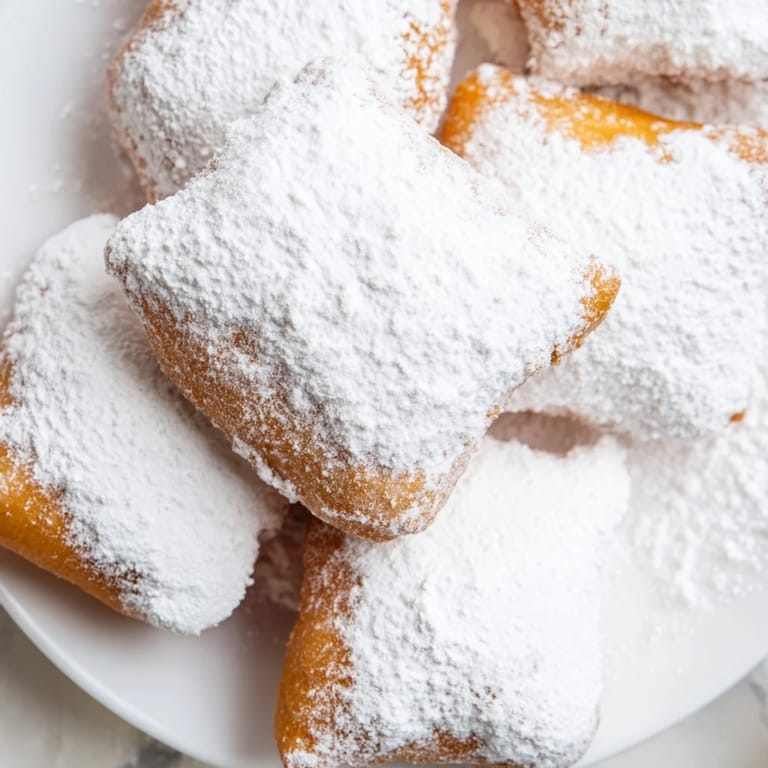
 The first time I brought beignets home from New Orleans, I couldn't wait to recreate that powdered-sugar-dusted magic in my own kitchen. My friend had dared me to fry them myself, laughing that I'd end up with dense hockey pucks instead of those ethereal pillows she'd grown up eating. But something about the way they puffed in the hot oil—that sudden bloom of golden dough—felt like a small victory. Now they're the thing I make when I want to turn an ordinary morning into something memorable, when the smell of yeast and sugar-dusted fried dough brings everyone running to the kitchen.
I made these for my book club once, and the conversation literally paused mid-sentence when someone bit into one. The whole room just went quiet except for the sound of powdered sugar being inhaled. That's when I realized beignets aren't just breakfast—they're a moment, a small pause where everyone forgets their to-do lists for a bite.
Ingredients
- All-purpose flour (3 1/2 cups): The foundation of those airy clouds; don't skip sifting it if you want consistent rise, and always fluff it in the bag before measuring.
- Warm water (1 cup): Temperature matters more than you'd think—too hot kills the yeast, too cool and it sleeps through the whole rise.
- Whole milk (1/4 cup): This adds a subtle richness that makes the crumb tender; don't substitute with almond milk unless you enjoy disappointment.
- Granulated sugar (1/4 cup): A pinch goes into the yeast mixture to wake it up; the rest sweetens the dough just enough.
- Active dry yeast (2 1/4 tsp): One packet is all you need, and store it in the fridge or freezer after opening to keep it alive longer than you'd expect.
- Large egg (1): It binds everything together and contributes to that signature tender crumb.
- Unsalted butter (2 tbsp, melted): Melt it and let it cool slightly so it doesn't scramble the egg when mixed in.
- Salt (1 tsp): Just enough to make the yeast sing without making anyone's blood pressure sing.
- Vegetable oil for frying: Use something neutral and stable at high heat; peanut or canola both work beautifully.
- Powdered sugar (1 1/2 cups): Dust it on while the beignets are still warm so it sticks, then dust again if you're feeling generous (and you should be).
Tired of Takeout? 🥡
Get 10 meals you can make faster than delivery arrives. Seriously.
One email. No spam. Unsubscribe anytime.
Instructions
- Wake up the yeast:
- Combine the warm water with a pinch of sugar and sprinkle the yeast over top, then let it sit for five minutes until it's foamy and bubbly—this is your signal that the yeast is alive and ready to work. If it doesn't foam, your yeast is too old and it's time to start over.
- Mix the dry base:
- In a large bowl or stand mixer, combine flour, remaining sugar, and salt, stirring them together so the flavors are already familiar before they meet the yeast. This takes thirty seconds and saves you from lumpy streaks later.
- Bring it together:
- Pour the foamy yeast, milk, egg, and melted butter into the dry mixture and stir until everything looks shaggy and reluctant—this is exactly what you want at this stage. Don't overthink it; rough and uneven is the goal.
- Knead into smoothness:
- Knead by hand or machine for five to seven minutes until the dough shifts from rough to silky and springs back slightly when you poke it. You'll feel the moment it happens, like the dough suddenly understands its purpose.
- Let it rise:
- Place the dough in an oiled bowl, cover it with plastic wrap or a towel, and find a warm spot—on top of the fridge, in a turned-off oven with the light on, or near a sunny window all work. After about an hour to ninety minutes, it should have roughly doubled, looking puffy and promising.
- Shape the pillows:
- Punch down the dough with the satisfaction it deserves, then transfer it to a floured surface and roll it out to quarter-inch thickness—you want it thin enough to puff dramatically but thick enough not to disappear. Cut into two-inch squares with a sharp knife or pizza cutter, and try not to eat the scraps raw (I always fail at this part).
- Heat the oil to ready:
- Pour oil into your deep fryer or heavy pot and bring it to 350°F—use a thermometer because eyeballing usually ends in either burnt beignets or soggy regret. Let it stabilize at temperature before you start frying so each batch gets the same treatment.
- Fry until puffed:
- Working in batches to avoid crowding, slide the dough squares into the hot oil and watch them sink, hesitate, then suddenly balloon upward as if remembering how to float. Fry for about one to two minutes per side, turning once, until both sides are pale golden and puffy.
- Drain and sugar:
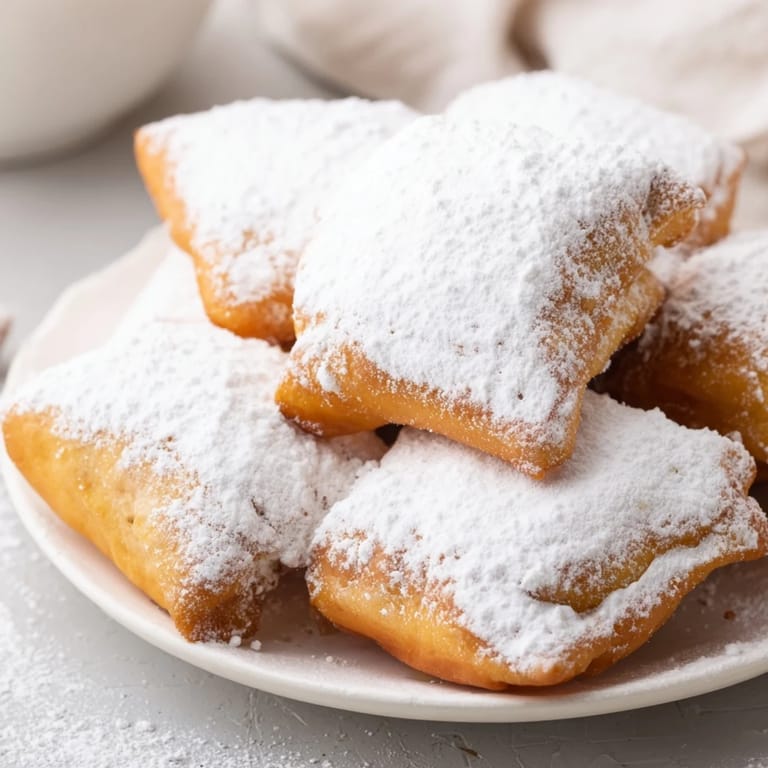
- Fish them out with a slotted spoon and let them rest on paper towels for just a moment—not long enough to cool. While they're still warm enough that the sugar will cling, dust them generously, and if you're being true to New Orleans form, dust them again.
 Pin It
 I remember standing in a café in the French Quarter watching a baker dust fresh beignets, and the way the powdered sugar hung in the air like tiny snow clouds made me understand why this wasn't just food—it was a ritual, a reason to slow down. Making them at home became my way of honoring that moment every time I got the urge to feel that magic again.
The Science of the Puff
Beignets work because yeast creates little bubbles of carbon dioxide throughout the dough, and when those bubbles hit hot oil, they expand rapidly—creating that sudden, dramatic puff that makes frying them oddly exciting. The egg and butter tenderize the dough so it stays light even after cooling, and the sugar feeds the yeast just enough to make sure fermentation happens at the right pace. Understanding this doesn't just make you a better baker; it makes the whole process feel less magical and more controllable, which is somehow even better.
Making Them Ahead
The dough can live in your fridge overnight, and honestly, cold-fermented dough sometimes develops more flavor than the rushed version—something about patience bringing out the wheat's natural sweetness. You can even cut and freeze the squares, then fry them directly from the freezer, adding maybe thirty seconds to the frying time. This is the secret to looking like you've been cooking all morning when really you just did the prep last night and spent this morning reading the news.
Beyond the Basic
Once you've mastered the classic, the variations start calling—a whisper of vanilla extract in the dough, a pinch of nutmeg for warmth, or even a touch of orange zest if you want to get fancy. Some people fill them with jam or chocolate, but I'm a purist; the simplicity is where the magic lives. The beautiful part is that the base recipe is so solid that any gentle addition feels natural rather than forced.
- Serve them immediately with chicory coffee for an authentic New Orleans moment that costs almost nothing but feels like traveling.
- If you have leftovers (which is unlikely), reheat them in a 350°F oven for a few minutes to bring back some of the warmth and texture.
- Beignets are best eaten the day they're made, warm, with someone who understands that this is not just breakfast—it's a small celebration.
 Pin It
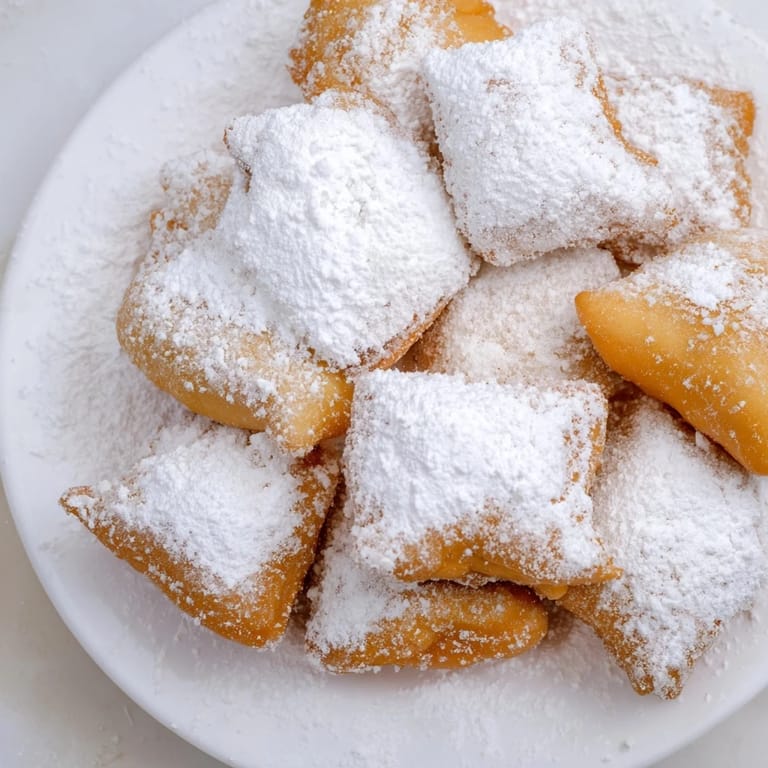
 There's something about beignets that transforms an ordinary moment into something worth remembering—maybe it's the ritual of dusting with powdered sugar, or maybe it's that first bite when the warmth still clings to the dough. Make them once and you'll understand why people drive across town for them.
Recipe FAQs
- → What makes these fried dough squares fluffy?
The use of active dry yeast and allowing the dough to rise properly creates air pockets, resulting in a light, fluffy texture after frying.
- → How do I know when the oil is at the right temperature?
Heating the oil to 350°F (175°C) ensures the dough puffs quickly and cooks evenly without absorbing excess oil.
- → Can I add extra flavors to the dough?
Yes, adding vanilla extract or a pinch of nutmeg enhances the subtle sweetness and aroma of the dough.
- → What is the best way to serve these warm treats?
Serve immediately after frying, generously dusted with powdered sugar, and pair with café au lait for an authentic experience.
- → How can leftovers be reheated without losing texture?
Reheat in a 350°F (175°C) oven for a few minutes to restore warmth and crispiness without sogginess.