 Pin It
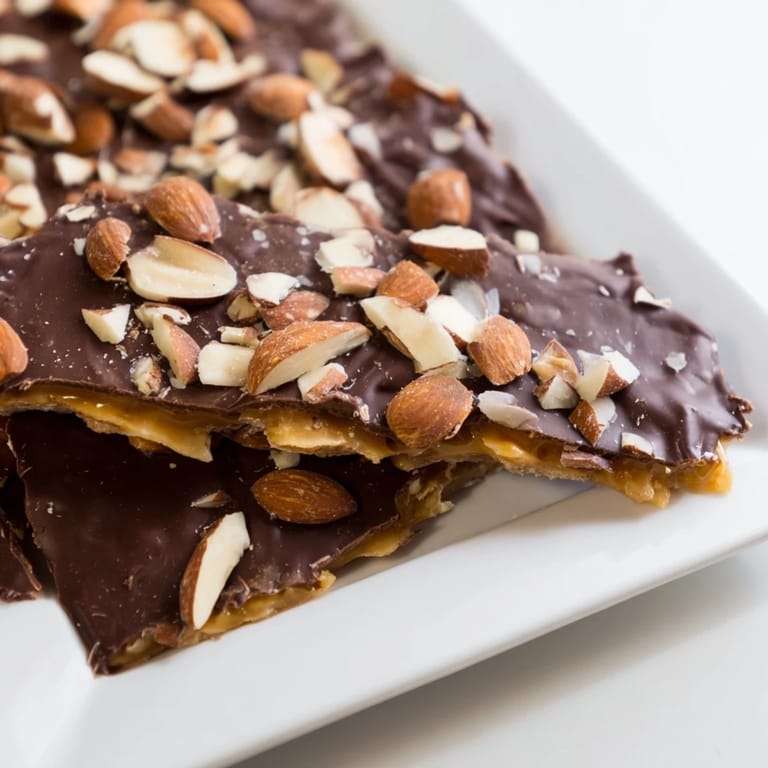
 My neighbor brought over a tin of homemade English toffee one Christmas, and I've been chasing that golden-brown memory ever since. The moment I bit through that shattering candy shell into the creamy chocolate and caught the nuttiness of the almonds, I knew I had to learn how to make it myself. What seemed impossible from a distance—hitting that exact temperature, spreading melted chocolate without burning it—turned out to be pure kitchen chemistry. Now this toffee is what I'm known for, the thing people actually request when they hear I'm baking.
I made this for my sister's book club last spring, and watching eight people simultaneously go quiet while eating it was worth every minute at the stove. One of them asked if I'd used some fancy imported butter—I hadn't, but the question stuck with me because it showed how much the technique mattered more than the ingredients. When you nail that candy stage and the chocolate spreads just right, people assume magic happened instead of just patience and a thermometer.
Ingredients
- Unsalted butter (1 cup): Use real butter, not margarine—it's where the toffee's actual flavor lives, and the water content matters for reaching that hard-crack stage.
- Granulated sugar (1 cup): This is what transforms into that golden, slightly bitter toffee layer if you're patient enough to let it cook dark.
- Fine sea salt (1/4 tsp): A small amount cuts through the sweetness and makes people wonder what that secret ingredient is.
- Water (2 tbsp): Helps the sugar dissolve evenly so you avoid gritty patches in your final toffee.
- Pure vanilla extract (1 tsp): Added off the heat so the volatile oils don't cook away—it adds a subtle warmth to the whole thing.
- Milk chocolate (200 g): Chopped or chips work equally well, but buy something you'd actually eat on its own since it's doing half the flavor work here.
- Toasted sliced almonds (3/4 cup): Buy them already toasted if you can, or toast your own at 325°F for 8 minutes—the smell tells you when they're done better than any timer.
Tired of Takeout? 🥡
Get 10 meals you can make faster than delivery arrives. Seriously.
One email. No spam. Unsubscribe anytime.
Instructions
- Prepare your pan:
- Line a 9x13-inch pan with parchment paper or silicone mat so you can lift the whole slab out later—this saves you from breaking toffee into a million frustrating pieces.
- Combine the base:
- Dump butter, sugar, salt, and water into a heavy-bottomed saucepan and stir over medium heat until everything melts together into a smooth mixture. A wooden spoon or silicone spatula gives you better control than metal, and you'll feel the sugar crystals dissolving as you stir.
- Chase the golden stage:
- Keep stirring frequently—not constantly, but enough that nothing burns on the bottom—and watch the color shift from pale yellow to amber to that deep golden brown. Use a candy thermometer, and when it hits 300°F, you've reached hard-crack stage, which takes about 10 to 15 minutes depending on your stove.
- Add vanilla and pour:
- Take it off heat immediately, stir in the vanilla extract quickly, and pour the hot toffee into your prepared pan. Work fast because toffee sets quickly, and spread it as evenly as you can with a spatula—uneven spots will drive you crazy later.
- Chocolate layer:
- Let the toffee sit for just 2 minutes, then scatter the chopped chocolate evenly across the top and wait another 2 minutes for it to soften. Spread it gently into an even layer, and if some pools in the corners, that's actually fine—people will find those extra-chocolatey bits and love you for it.
- Finish with almonds:
- Sprinkle the toasted almonds over the warm chocolate and press them in lightly so they stick, creating little pockets of nuttiness throughout.
- Cool and set:
- Leave it on the counter for about 2 hours to cool completely, or stick it in the refrigerator if you're impatient—either way, you'll know it's ready when it's solid and no longer soft to the touch.
- Break and store:
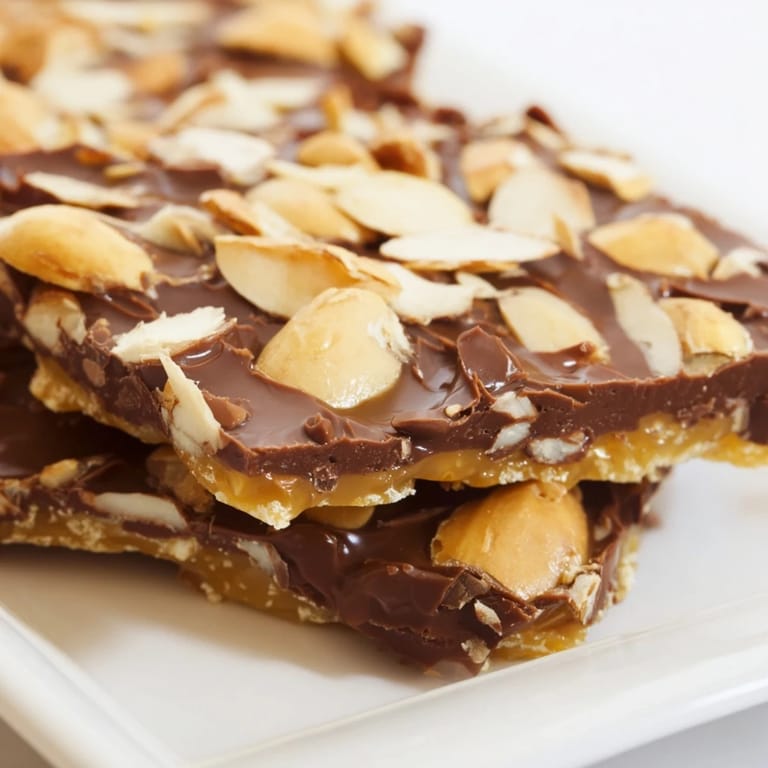
- Once fully set, break the toffee into pieces—irregular shards actually look more homemade and appealing than perfect squares. Store in an airtight container in a cool place for up to 2 weeks, though it rarely lasts that long.
 Pin It
 My kid asked why I make this instead of buying fancy candy bars, and I realized I couldn't explain the actual reason—something about stirring hot butter and sugar while the kitchen fills with this caramel perfume makes me feel like I'm creating something real. That's when toffee stops being a dessert and becomes a moment I'm choosing to spend in the kitchen instead of scrolling through life.
Flavor Variations Worth Trying
Dark chocolate swaps in beautifully if you want a more sophisticated bitter edge that cuts through the sweetness, and honestly, it feels slightly fancier even though the technique stays identical. Sea salt flakes sprinkled on top of the chocolate before the almonds go down add a salty-sweet contrast that people always comment on. I've experimented with adding a pinch of cayenne pepper to the toffee base itself, which sounds strange until you taste how it deepens the whole flavor without anyone detecting it.
Troubleshooting the Sticky Bits
If your toffee turns out chewy instead of shattery, you didn't reach 300°F—next time, trust the thermometer over your instincts. When chocolate won't spread smoothly, let it soften another minute or two on the residual heat. If almonds slide off because the chocolate cooled too much, you can gently reheat the pan in a 200°F oven for a minute to soften things back up just enough to press them in again.
Making This Completely Your Own
Once you nail this recipe once, you'll realize it's a blank canvas for whatever nuts or seeds you love, and you can feel confident experimenting. The proportions and technique are forgiving enough that small tweaks won't wreck the whole thing, and that confidence is when home cooking becomes actual cooking.
- Toast your own nuts or seeds and play with flavors like pistachios, pecans, or even pumpkin seeds for something unexpected.
- Make it nut-free by using toasted sesame seeds, coconut flakes, or crushed pretzels—the crunch is what matters, not the specific ingredient.
- Pack these in small boxes or tins as gifts, and watch people's faces when they realize you made the entire thing from scratch.
 Pin It
 This toffee has quietly become the thing I'm proudest of making, not because it's complicated but because it's proof that patience and a thermometer can turn simple butter and sugar into something people remember. Once you've made it twice, you'll own it forever.
Recipe FAQs
- → What temperature should the toffee reach during cooking?
The toffee should be cooked until it reaches the hard crack stage at about 300°F (150°C) to achieve the right texture.
- → Can dark chocolate be used instead of milk chocolate?
Yes, dark chocolate can replace milk chocolate for a richer and slightly less sweet flavor profile.
- → How should the toffee be cooled and stored?
Allow the toffee to cool completely at room temperature or refrigerate for faster setting. Store in an airtight container to maintain freshness.
- → Are there nut-free alternatives for the topping?
For a nut-free version, omit the almonds or substitute them with toasted seeds to preserve texture and flavor.
- → What tools are essential for making this toffee?
A heavy-bottomed saucepan, candy thermometer, and a spatula are key to cooking and spreading the toffee layers evenly.