 Pin It
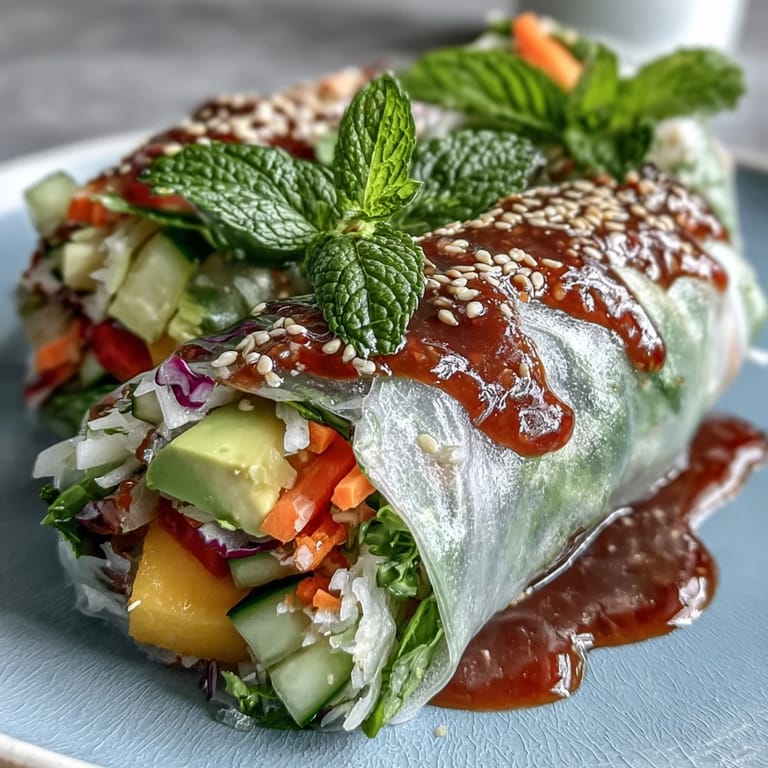
 I discovered these spring rolls on a humid afternoon when my neighbor showed up with a basket of mangoes from her farmer's market haul, and we decided to turn them into something light and energizing. There's something about the way the rice paper becomes silky and translucent when you dip it just right that made me feel like I was learning a secret technique passed down through generations. The first time I rolled them, my hands were clumsy and uncertain, but by the third one, my fingers found their rhythm. Now, every time I make them, I think about that afternoon and how a simple ingredient can spark the kind of cooking that feels both grounding and celebratory.
My partner once brought these to a potluck where everyone else had brought heavy casseroles and pasta dishes, and watching people's faces light up when they bit into something so alive and colorful felt like a small victory. Someone asked for the recipe before they'd even finished their first roll, and suddenly three more people wanted to know how to make them.
Ingredients
- Rice paper wrappers (22 cm): These are delicate and require just the right amount of soaking—too long and they tear, too short and they stay stiff and crack when you try to fold them.
- Ripe mango: The sweetness here is your baseline flavor, so choose one that's fragrant and yields slightly to pressure without being mushy.
- Ripe avocado: Slice it just before assembly so it doesn't brown and lose that buttery texture that makes these rolls feel luxurious.
- Carrot and cucumber: The crunch matters as much as the flavor—it's what makes each bite interesting and prevents the rolls from feeling soggy.
- Red bell pepper: Its natural sweetness echoes the mango while the slight firmness provides structure to hold everything together.
- Purple cabbage: Beyond the gorgeous color it adds, the gentle crunch and mild earthiness balance all the bright fresh flavors.
- Fresh mint, cilantro, and basil: These aren't just garnish—they're essential to the personality of the roll, so don't skip them or use dried herbs as a substitute.
- Sweet chili sauce with lime juice and soy sauce: This mixture transforms from one-note to complex and layered when you add the acid and salty depth.
Tired of Takeout? 🥡
Get 10 meals you can make faster than delivery arrives. Seriously.
One email. No spam. Unsubscribe anytime.
Instructions
- Set Up Your Station
- Arrange all your vegetables, mango, and avocado on a platter within arm's reach so you can work without stopping to chop mid-roll. This prep moment feels methodical and calming, and it makes the actual rolling feel effortless.
- Warm the Water Just Right
- Fill a shallow dish with warm (not hot) water—it should feel like a comfortable bath temperature for your hand. Let each wrapper soak for about 10 to 15 seconds, watching it transform from stiff and translucent to soft and pliable.
- Soften Each Wrapper
- The moment the rice paper becomes supple enough to flex without cracking, lift it out and lay it on a damp kitchen towel or clean cutting board. The wetness helps it stick to itself later, so don't let it dry out completely.
- Build Your Roll with Intention
- Place a small handful of ingredients in the lower third of the wrapper—less filling than you think you need is always the right amount, since it expands as you roll. Arrange them in a thin line so everything stays balanced and the roll closes neatly.
- Fold Like You Mean It
- Bring the bottom edge of the wrapper up and over the filling, tuck in both sides, then roll tightly upward using the towel or board as leverage. The pressure should be firm but not so aggressive that you squeeze out all the juices from the vegetables.
- Make the Dipping Sauce
- Whisk together the sweet chili sauce, fresh lime juice, and soy sauce in a small bowl until smooth and unified in flavor. If you're using sesame seeds, sprinkle them in at the very end so they don't sink and disappear.
- Serve Immediately
- Spring rolls are best eaten fresh when the rice paper still has a slight chew to it and all the vegetables are at peak crispness. Serve alongside the dipping sauce and watch people enjoy something that tastes both simple and refined.
 Pin It
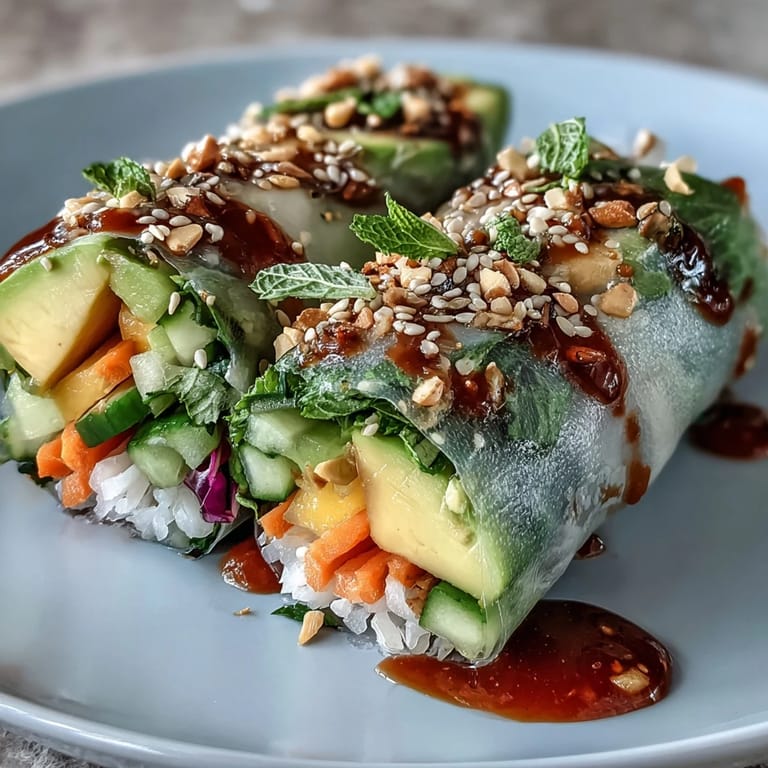
 These rolls have become my solution for when I want to feel like I'm taking care of myself and the people around me at the same time. There's something about serving fresh, vibrant food that makes everyone at the table slow down and actually taste what they're eating.
The Wrapper Technique That Actually Works
The secret to rolling spring rolls without frustration is understanding that the rice paper wrapper continues to soften as it sits on the damp towel—so by the time you're actually rolling it, it's even more pliable than it felt when you first pulled it from the water. I learned this the hard way after tearing my first three wrappers trying to be too aggressive. Now I let it sit for a moment, and that small pause makes everything easier.
Why These Rolls Stay Fresh All Day
If you need to make these ahead, wrap them tightly in damp paper towels and then plastic wrap, and they'll stay wonderful in the refrigerator for a full day. The moisture from the damp towels keeps the rice paper from drying out and becoming brittle, and the plastic wrap seals everything so nothing absorbs odors or dries out.
Variations That Keep Things Interesting
Once you get comfortable with the basic technique, these rolls become a canvas for whatever fresh ingredients you have on hand or whatever you're craving. The framework of creamy, crunchy, and herbaceous works with so many combinations that you'll find yourself making them differently each time.
- Swap Thai basil for regular basil if you can find it, or add parsley for a different kind of green freshness.
- Layer in thin strips of marinated tofu or tempeh if you want to add protein and make them more substantial for a full meal.
- Keep the dipping sauce in the refrigerator for up to five days so you can make fresh rolls whenever the mood strikes.
 Pin It
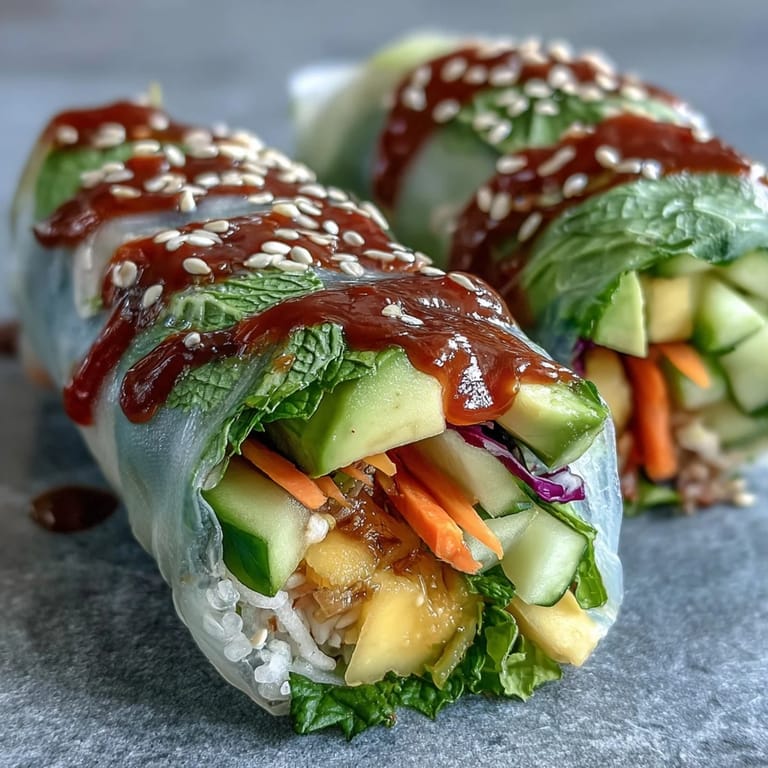
 These spring rolls have taught me that the best food is often the simplest—when you start with genuinely ripe fruit and crisp vegetables and treat them gently, you don't need much else. They've become my answer to the question of what to make when I want something that nourishes without complicating.
Recipe FAQs
- → How do I soften the rice paper wrappers without tearing?
Submerge each wrapper in warm water for 10–15 seconds until just pliable. Avoid soaking too long to prevent tearing when rolling.
- → Can I prepare the rolls ahead of time?
Yes, wrap them tightly in damp paper towels and plastic wrap, then refrigerate for up to 24 hours to maintain freshness.
- → What are good herb substitutes for this dish?
Thai basil or parsley work well as alternatives to mint, cilantro, and basil, bringing fresh aromatic notes.
- → How can I add protein to these rolls?
Incorporate thin strips of marinated tofu or tempeh into the filling for a protein boost.
- → Is the sweet chili sauce store-bought or homemade?
Both options work. Homemade sauce can be made by simmering rice vinegar, sugar, soy sauce, garlic, and chili flakes until thickened.