 Pin It
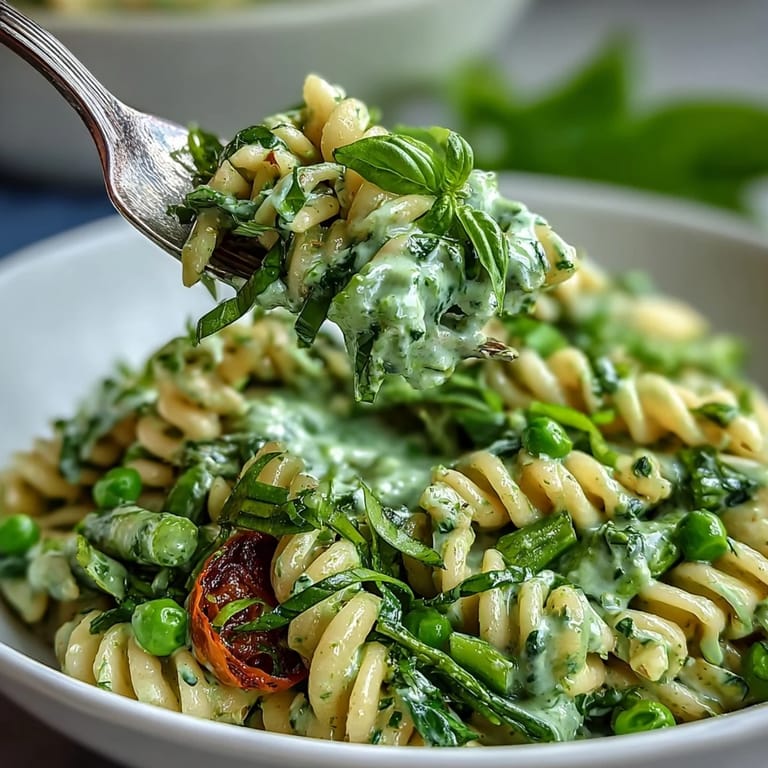
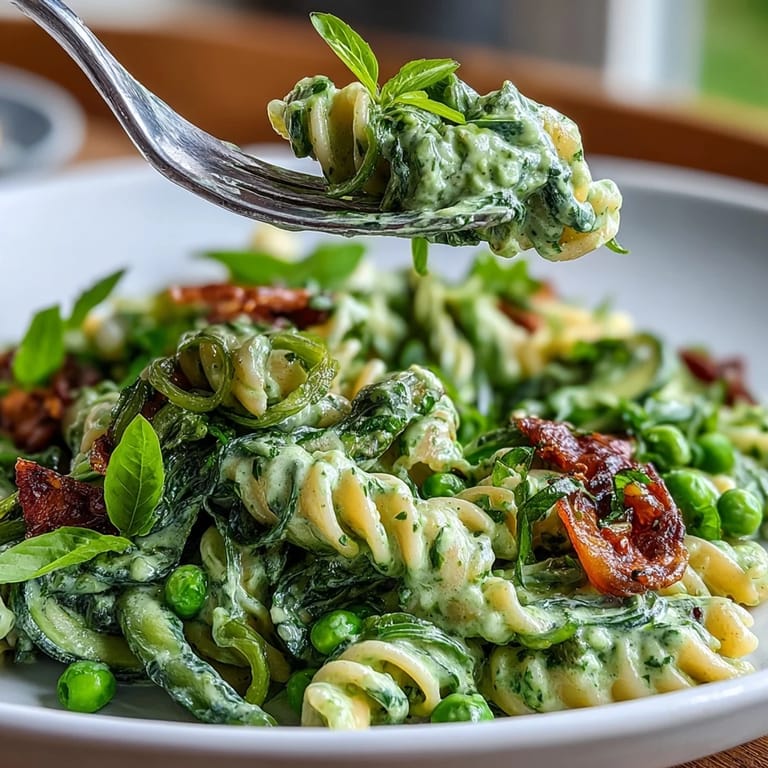
 My neighbor showed up at my door one sweltering afternoon with a container of this pasta salad, and I was instantly won over by how vibrant it looked—those flecks of basil catching the light, the peas scattered like little jewels through the pasta. She mentioned it was vegan, and I remember thinking it couldn't possibly be creamy without dairy, but one bite proved me hilariously wrong. Now I make it almost weekly when I want something that feels both indulgent and impossibly light.
I brought this to a family picnic last summer, genuinely nervous that the vegan aspect might get overlooked or questioned. Instead, it was the first dish to empty, and my aunt—the traditional cook in the family—asked for the recipe. Watching her skepticism turn into genuine curiosity reminded me that good food doesn't need a story or a label; it just needs to taste like summer.
Ingredients
- Short pasta (fusilli, rotini, or shells), 300 g: The shape matters here because it catches the dressing beautifully and holds onto those fresh veggie bits in every forkful.
- Frozen peas, 1 cup thawed: Don't skip the thawing step, and honestly, they taste fresher than fresh because they're frozen at peak ripeness.
- Cucumber, 1 small diced: The water content keeps everything crisp, so dice it just before tossing if you can.
- Baby spinach, 1 cup roughly chopped: It wilts slightly from the warmth of the pasta, releasing its earthiness into the dressing.
- Radishes, 1/2 cup thinly sliced: These add a peppery crunch that keeps the salad from feeling one-dimensional.
- Scallions, 1/3 cup thinly sliced: The white and green parts both matter—don't discard the greens for garnish.
- Vegan mayonnaise, 1/2 cup: This is the creamy base that makes it all work; I use brands that don't separate when blended.
- Unsweetened plant-based yogurt, 1/4 cup: It adds tang and prevents the dressing from feeling heavy, almost like a sour cream moment.
- Fresh basil, 1/4 cup packed: This is the soul of the dressing, so don't use dried here—it fundamentally changes the flavor.
- Fresh parsley and chives, 2 tbsp each: They round out the herbaceous notes and prevent the basil from being too forward.
- Fresh tarragon, 1 tbsp: If you can't find it, use extra parsley, but tarragon adds this subtle anise undertone that feels a bit fancy.
- Lemon juice, 2 tbsp: Fresh lemon only; the acidity brightens everything and keeps the dressing from tasting flat.
- Olive oil, 1 tbsp: A quality oil makes the dressing silky without being greasy.
- Garlic clove, 1 small: One is enough—too much and you'll overpower the delicate herbs.
- Salt and black pepper to taste: Season gradually because the pasta water already carries salt.
- Fresh basil and toasted sunflower seeds for garnish: These final touches are what make people actually notice the dish.
Tired of Takeout? 🥡
Get 10 meals you can make faster than delivery arrives. Seriously.
One email. No spam. Unsubscribe anytime.
Instructions
- Bring the pasta to life:
- Fill a large pot with salted water—it should taste like the sea—and bring it to a rolling boil. Add your pasta and cook until it bends easily but still has a little resistance when you bite it. Drain it in a colander, then rinse under cold water while gently tossing with your hands to stop the cooking and remove excess starch.
- Build the dressing while things are still warm:
- In a blender or food processor, combine the vegan mayo, yogurt, basil, parsley, chives, tarragon, lemon juice, olive oil, and garlic. Blend until the herbs are fully incorporated and the whole thing looks like a vibrant green cream. Taste it—this is where you season to your preference.
- Assemble the foundation:
- In a large mixing bowl, combine your cooled pasta with the thawed peas, diced cucumber, chopped spinach, radishes, and scallions. Mix gently to distribute everything evenly so no forkful is bare.
- Marry it all together:
- Pour the dressing over the salad and toss gently but thoroughly, using two utensils to coat every piece without crushing the delicate vegetables. This is the moment when it transforms from separate ingredients into something cohesive.
- Taste and adjust with intention:
- Take a bite and pause—does it need more lemon brightness? Another pinch of salt? Fresh herbs are your friends here, and this is when you make it uniquely yours.
- Present it beautifully:
- Transfer to a serving dish and garnish with those fresh basil ribbons and a scatter of toasted sunflower seeds. Let it sit for a moment before serving to let the flavors settle into each other.
- Know when to serve it:
- You can eat it immediately while there's still a bit of textural contrast, or chill it for an hour or two if you prefer it colder and more blended together.
 Pin It
 Last week, my daughter asked if she could take this to her school potluck, and I watched her confidently present a vegan dish to a roomful of kids who didn't know or care that it was plant-based—they just knew it tasted like summer in a bowl. That's when I realized this recipe had transcended being about dietary choices and become about feeding people joy.
The Magic of Fresh Herbs
The transformation happens in the blender when those fresh herbs surrender their oils into the dressing. I learned this the hard way by trying to make it with dried herbs once, and the result was flat and disappointing. Fresh herbs aren't a luxury here; they're the entire reason this dish works. The basil, parsley, chives, and tarragon aren't just supporting characters—they're the main event.
Timing and Temperature Matter
The temperature dance is subtle but important: the pasta needs to be completely cool so it doesn't wilt everything, but the dressing should be at room temperature so it coats evenly. I used to rush this, pouring warm dressing over warm pasta, and the texture suffered. Now I take those extra ten minutes to let the pasta truly cool, and the difference is noticeable. Everything stays crisp, everything stays distinct, yet somehow completely unified.
Beyond the Basic Recipe
Once you nail the base, this dish becomes a canvas for whatever vegetables are calling to you. I've added grilled asparagus when spring feels extra abundant, thrown in some diced avocado when I want richness, and even experimented with roasted chickpeas for extra protein. The dressing is so versatile that it welcomes these variations without losing its identity.
- Keep sunflower seeds toasted and stored separately so they stay crunchy right up until serving time.
- If you're taking this somewhere, pack the dressing separately and toss it in just before eating for maximum crispness and freshness.
- This recipe doubles beautifully for bigger crowds, and the dressing makes enough that it feels luxurious rather than sparse.
 Pin It
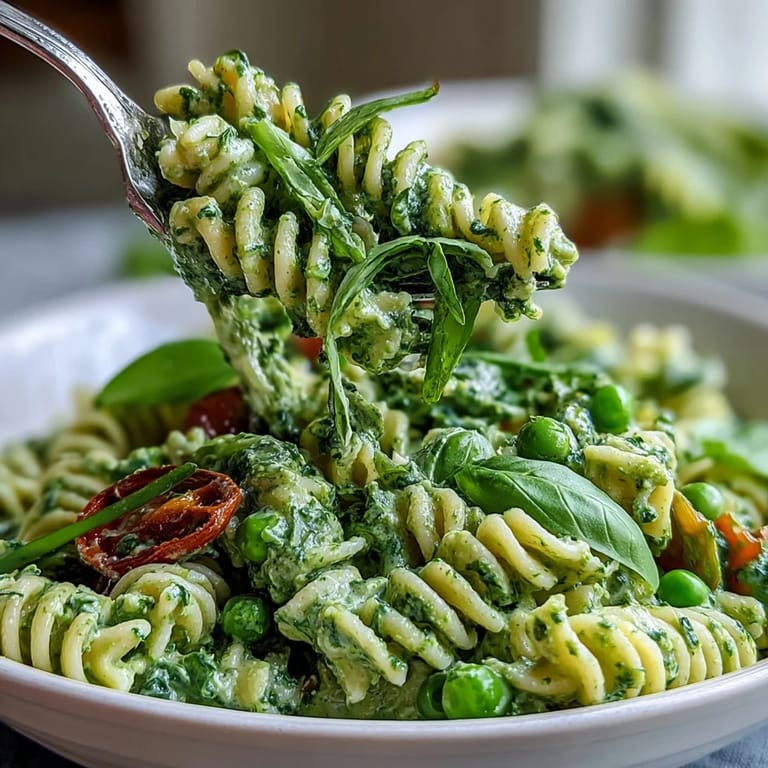
 This pasta salad has become my answer to so many occasions—the potluck I don't want to overthink, the lunch that needs to feel special, the reminder that vegan cooking isn't about sacrifice but abundance. Make it once, and it will find its way into your regular rotation.
Recipe FAQs
- → What type of pasta works best for this salad?
Short pasta shapes like fusilli, rotini, or shells hold the dressing well and provide great texture.
- → Can I prepare the dressing ahead of time?
Yes, blending the dressing in advance allows flavors to meld, making your dish even more flavorful.
- → How can I make this dish gluten-free?
Simply substitute regular pasta with your favorite gluten-free pasta variety without altering the flavor.
- → Are there options to add more vegetables?
Diced avocado or grilled asparagus work well for extra freshness and flavor.
- → What can I use instead of sunflower seeds for garnish?
Toasted pumpkin seeds or leaving out nuts and seeds altogether keeps it nut-free and still tasty.