 Pin It
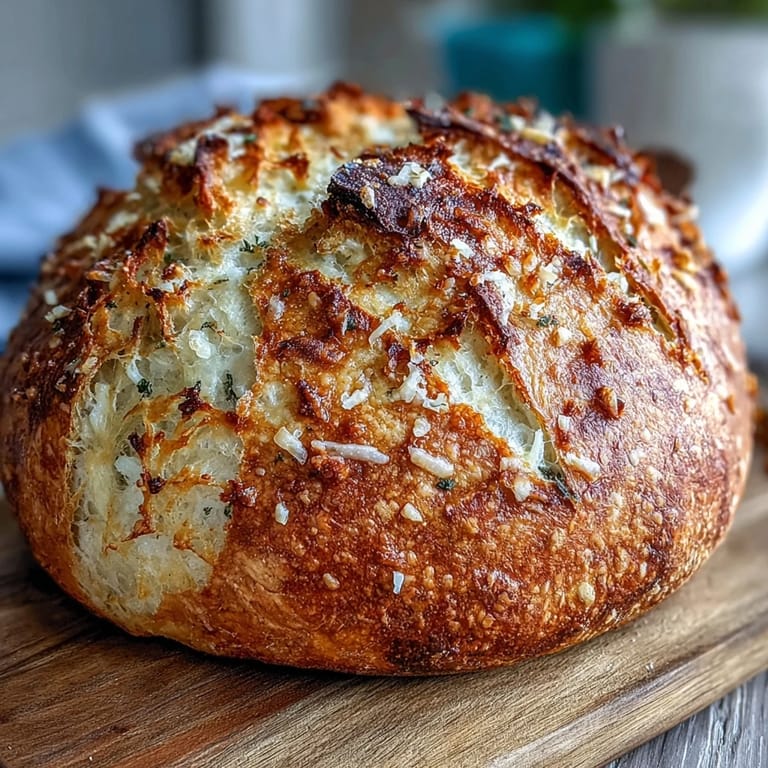
 The smell of this bread baking through the house on a rainy Sunday afternoon changed everything I thought I knew about homemade bread. My teenage son wandered into the kitchen, asking what smelled so incredible, and ended up standing by the oven watching the crust turn golden through the Dutch oven lid. That first slice, still warm with melted pockets of Parmesan, made us both forget we were waiting for dinner to be ready.
I made this for a neighborhood soup swap last winter, and three different neighbors asked for the recipe before they even tasted their soups. Watching people break off pieces of the crusty exterior while hovering around the kitchen island felt like hosting the best kind of dinner party. Now it is my go to whenever I need to bring something that makes people feel instantly at home.
Ingredients
- All purpose flour: The structure that holds all those gorgeous air pockets
- Salt: Do not skip this or your bread will taste flat and sad
- Granulated sugar: Just enough to feed the yeast without making it sweet
- Active dry yeast: Make sure it bubbles or start over
- Warm water: Think bathwater temperature, about 110°F
- Olive oil: Adds moisture and keeps the crumb tender
- Freshly grated Parmesan: The pre grated stuff will not melt the same way
- Minced garlic: Fresh cloves give you those aromatic pockets throughout
- Fresh rosemary or parsley: Optional but it adds such a pretty herbal note
Tired of Takeout? 🥡
Get 10 meals you can make faster than delivery arrives. Seriously.
One email. No spam. Unsubscribe anytime.
Instructions
- Mix the dry foundation:
- Whisk flour, salt, and sugar in a large bowl until combined
- Wake up the yeast:
- Dissolve yeast in warm water for 5 minutes until foamy on top
- Bring it together:
- Pour the yeast mixture and olive oil into the dry ingredients, stirring with a wooden spoon until sticky
- Add the good stuff:
- Fold in Parmesan, garlic, and herbs until everything is evenly distributed
- Let it work:
- Cover and let rise 12 to 18 hours until bubbly and doubled
- Shape gently:
- Turn dough onto a floured surface and form into a round loaf without deflating it
- Preheat properly:
- Place dough on parchment and rest 30 minutes while heating oven to 450°F with Dutch oven inside
- Score and bake:
- Cut a slash across the top, then bake 30 minutes covered and 15 minutes uncovered
- Cool completely:
- Let the loaf rest on a wire rack for at least 30 minutes before slicing
 Pin It
 My friend Sarah called me at 9pm one night, panic in her voice because she had forgotten to make something for her office potluck the next morning. I walked her through mixing this dough before bed, and she texted me the next day saying people were asking if she bought it from a bakery. That is how foolproof this recipe really is.
The Magic of Overnight Rising
Those long hours let enzymes break down starches and develop flavors you cannot rush. The dough becomes bubbly and alive in a way that a quick rise never achieves. Plus, waking up to something that has grown and transformed overnight feels like kitchen magic.
Getting That Bakery Crust
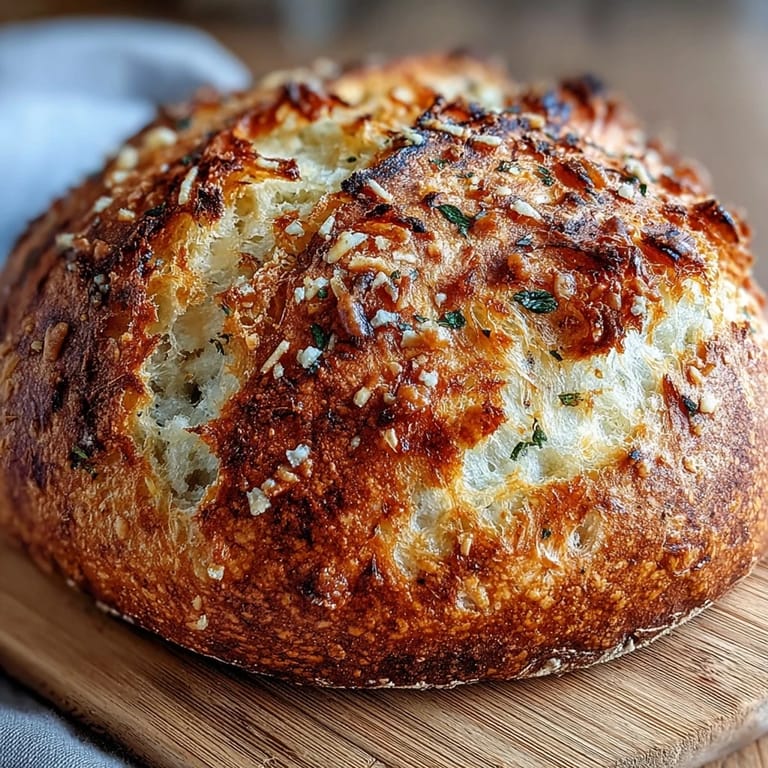
The Dutch oven creates a steamy environment that mimics professional bread ovens. When you first put the dough in, the moisture from the dough gets trapped, allowing the bread to expand before the crust sets. That initial covered bake is what gives you that dramatic oven spring and crackly exterior.
Making It Your Own
Once you have mastered this base recipe, the variations are endless. Swap asiago or gruyère for the Parmesan, or try chopped sun dried tomatoes instead of herbs. My favorite variation adds cracked black pepper and lemon zest along with the cheese.
- Try adding caramelized onions for a sweet savory twist
- A bit of chopped roasted garlic deepens the flavor
- Experiment with different hard cheeses until you find your favorite
 Pin It
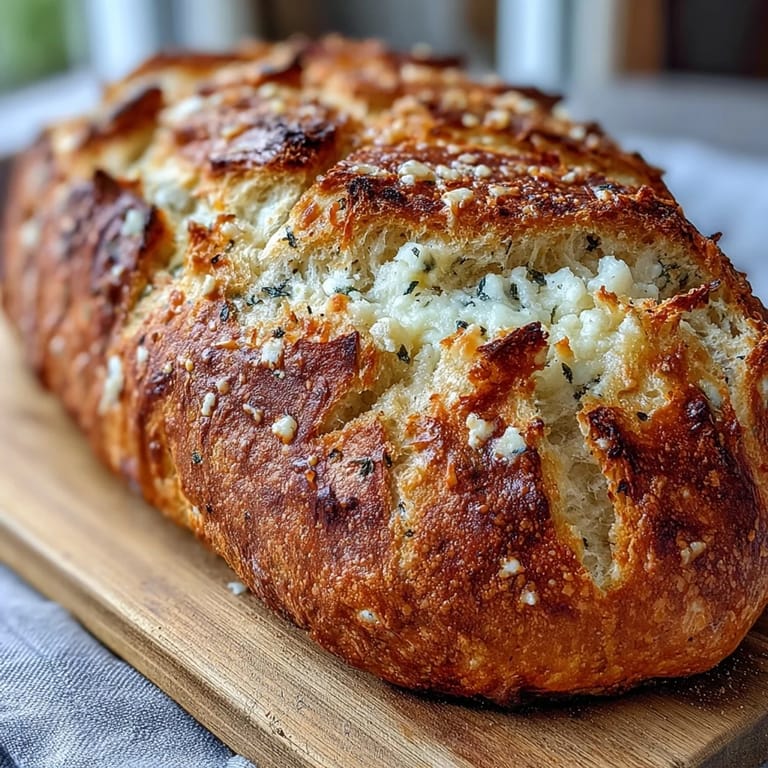
 There is something so satisfying about pulling a golden loaf from the oven that you created from scratch. This bread turns ordinary weeknight dinners into something special.
Recipe FAQs
- → Can I skip the overnight rise?
While you can reduce rising time to 4-6 hours in a warm spot, the overnight fermentation develops superior flavor and texture. The extended rest allows enzymes to break down sugars, creating deeper complexity and that signature airy crumb structure.
- → What cheese works best?
Freshly grated Parmesan delivers the sharpest flavor, but aged Asiago or Gruyère make excellent alternatives. Grate your own cheese rather than using pre-shredded varieties, as the anti-caking agents in packaged cheese can affect texture.
- → Is a Dutch oven necessary?
A Dutch oven creates essential steam for a crisp crust, but any heavy oven-safe pot with a tight-fitting lid works. Alternatively, place a metal pan on the bottom rack and add ice cubes when baking to generate steam.
- → Why is my dough so sticky?
Sticky dough is intentional—avoid adding excess flour. The high hydration content creates those signature air pockets and tender crumb. Use wet hands or a floured surface when shaping to manage tackiness without compromising texture.
- → How should I store leftovers?
Wrap completely cooled loaves in parchment or cloth and store at room temperature for 2-3 days. Avoid plastic bags, which trap moisture and soften the crust. For longer storage, slice and freeze in airtight bags, toasting directly from frozen.
- → Can I make this dairy-free?
Substitute nutritional yeast or aged vegan Parmesan alternatives, though the flavor profile will shift. The garlic and herbs still provide excellent savory notes. Results may vary in texture and melting characteristics.