 Pin It
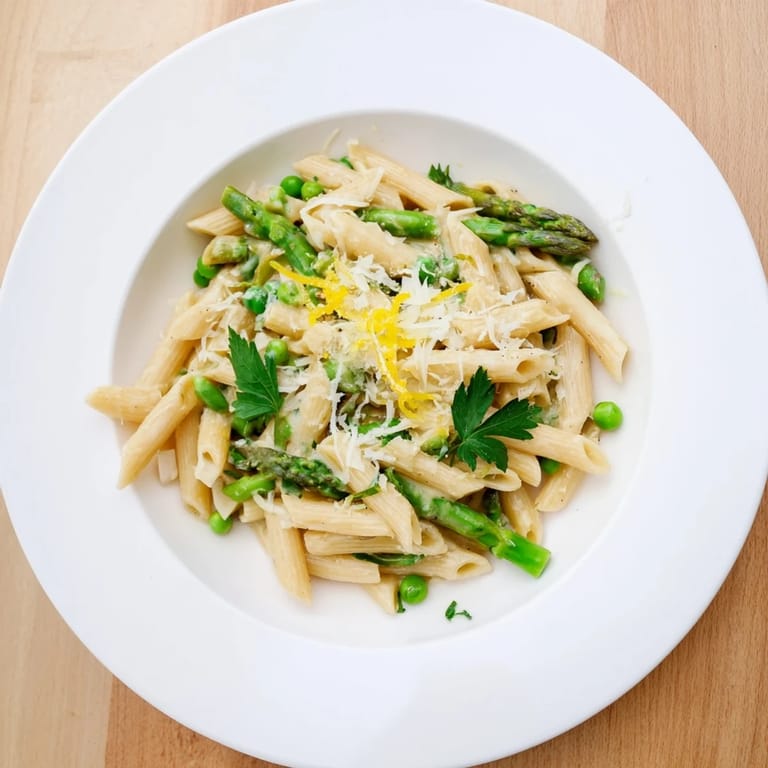
 The first bunches of asparagus at the farmers market always pull me in, their tight little tips promising the season has turned. This pasta came together on a Tuesday when I wanted something bright but comforting, that strange in-between weather where winter lingers but spring keeps knocking at the door.
Last year I made this for my sister who swore she hated green beans, and she went back for seconds. The vegetables stay snappy and sweet instead of turning mushy, and that hit of lemon at the end makes everything taste like it has been dusted with morning light.
Ingredients
- 350 g (12 oz) penne pasta: The ridges catch the creamy sauce perfectly, though rigatoni works if that is what you have
- 200 g (7 oz) asparagus, trimmed and cut into 2.5 cm (1-inch) pieces: Choose spears with tight tips and avoid the woody bottom third
- 150 g (1 cup) fresh or frozen peas: Fresh peas pop with sweetness but frozen work beautifully when fresh are not available
- 150 g (1 cup) green beans, trimmed and cut into 2.5 cm (1-inch) pieces: They add a satisfying crunch that holds up against the soft pasta
- 2 tbsp olive oil: Use a fruity, robust olive oil since its flavor will shine through
- 3 cloves garlic, finely minced: Freshly minced garlic gives a sweeter, more aromatic punch than pre-minced
- 60 ml (1/4 cup) vegetable broth: This creates a base that helps the sauce emulsify and coat the pasta
- 120 ml (1/2 cup) heavy cream: For a lighter touch, half-and-half still delivers velvety results
- 60 g (2/3 cup) freshly grated Parmesan cheese: Buy a wedge and grate it yourself, pre-grated resists melting smoothly
- 1/2 tsp freshly ground black pepper: Freshly cracked pepper has floral notes that ground the creamy sauce
- 1/4 tsp salt (or to taste): Start with less, the Parmesan brings its own saltiness
- Zest of 1 lemon: Use a microplane or grater, avoiding the bitter white pith beneath
- 1 tbsp fresh lemon juice: This brightens all the rich elements and wakes up the vegetables
- Extra grated Parmesan and fresh basil or parsley, chopped: For that finished, restaurant-style touch right before serving
Tired of Takeout? 🥡
Get 10 meals you can make faster than delivery arrives. Seriously.
One email. No spam. Unsubscribe anytime.
Instructions
- Get your pasta water going:
- Bring a large pot of salted water to a boil, the water should taste like the sea, then add the penne and cook according to package directions until al dente.
- Start the aromatic base:
- While pasta cooks, heat olive oil in a large skillet over medium heat and add the minced garlic, sautéing for just 1 minute until fragrant but not browned.
- Cook the vegetables until bright:
- Add the asparagus, green beans, and peas to the skillet, sautéing for 3 to 4 minutes until the vegetables are tender-crisp and still vibrantly green.
- Build the sauce foundation:
- Pour in the vegetable broth and let it bubble for 2 minutes, allowing the vegetables to absorb some of that savory liquid.
- Create the creamy sauce:
- Reduce heat to low and stir in the heavy cream and Parmesan, cooking until the cheese melts completely and the sauce becomes silky smooth.
- Combine everything:
- Add the cooked penne to the skillet and toss well to coat, adding some of the reserved pasta water if the sauce needs help clinging to every piece.
- Season and brighten:
- Finish with black pepper, salt, lemon zest, and lemon juice, tossing one more time to distribute all those bright flavors evenly.
- Serve it up:
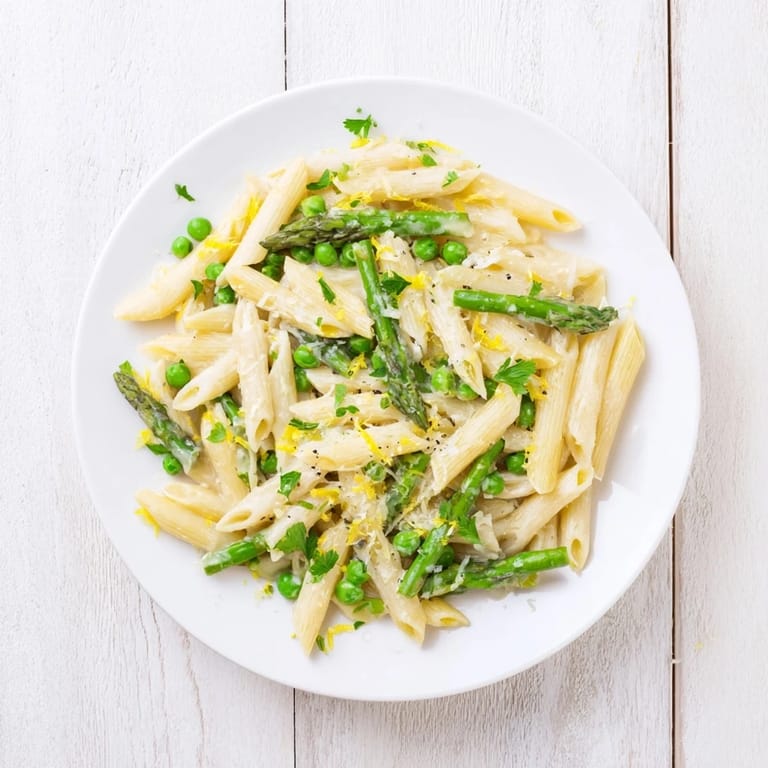
- Plate immediately while the pasta is piping hot, showering each serving with extra Parmesan and fresh herbs.
 Pin It
 This dish has become my go-to when friends come over for casual dinner and conversation. Something about the green vegetables against the cream-colored sauce makes people feel taken care of without me having spent hours at the stove.
Getting The Vegetables Right
I have learned that cutting all the vegetables to roughly the same size means they finish cooking at the same time. Nothing worse than biting into a tender pea alongside an undercooked asparagus spear.
Making It Your Own
Sometimes I toss in handfuls of baby spinach or arugula at the very end, letting them wilt slightly in the hot pasta. A pinch of red pepper flakes in the garlic oil gives it this gentle warmth that sneaks up on you.
Timing Is Everything
The secret is having everything prepped before the pasta hits the water. Once those vegetables hit the hot pan, they move fast, and you do not want to be grating cheese or mincing garlic while the asparagus is already turning from bright to dull.
- Grate your Parmesan before you start cooking
- Have your lemon zested and juiced and ready
- Keep the pasta water draining within arms reach of the stove
 Pin It
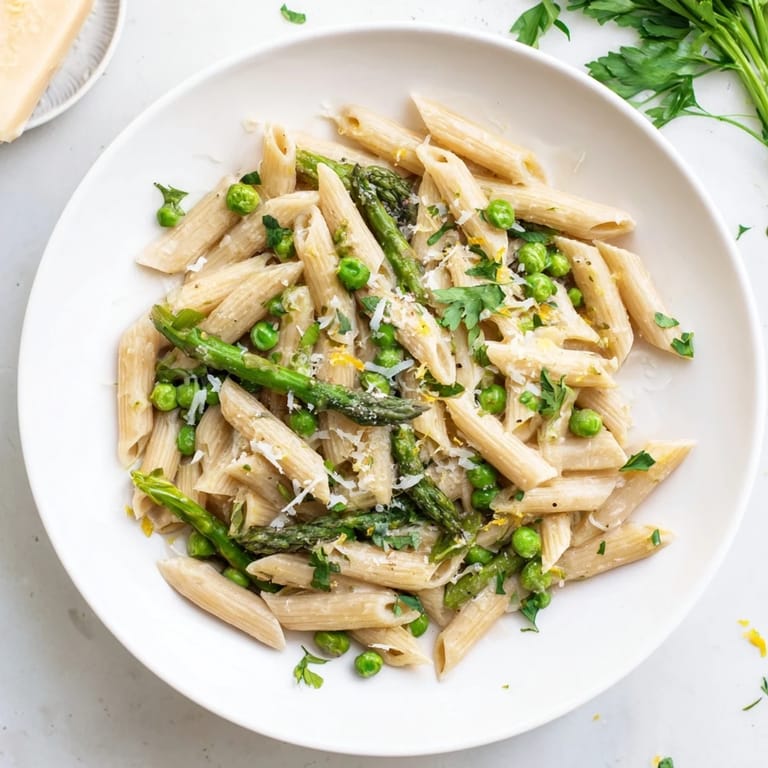
 Spring in a bowl, ready in under an hour, with leftovers that reheat beautifully for lunch the next day.
Recipe FAQs
- → Can I make this dish ahead of time?
While best served fresh, you can prepare components ahead. Cook vegetables and sauce separately, then combine with freshly cooked pasta when ready to serve. Reheat gently with a splash of pasta water to maintain creaminess.
- → What other vegetables work in this dish?
Spring favorites like sugar snap peas, snow peas, or diced zucchini substitute beautifully. For early spring, try adding fresh spinach or aruglia during the final minute of cooking for added color and nutrition.
- → How do I prevent the sauce from separating?
Keep heat low when adding cream and cheese, stirring constantly. Avoid boiling once cream is incorporated. If sauce appears too thick, the reserved pasta water helps restore silky consistency without separating.
- → Can I use a different pasta shape?
Fusilli, farfalle, or rigatoni work wonderfully as they catch the creamy sauce well. Short pasta with ridges or tubes holds onto vegetables and sauce effectively. Long shapes like fettuccine also make a lovely presentation.
- → Is this suitable for meal prep?
Yes! Portion into airtight containers and refrigerate up to 3 days. When reheating, add a splash of water or cream to loosen the sauce. Microwaving at 50% power prevents the cream from breaking.